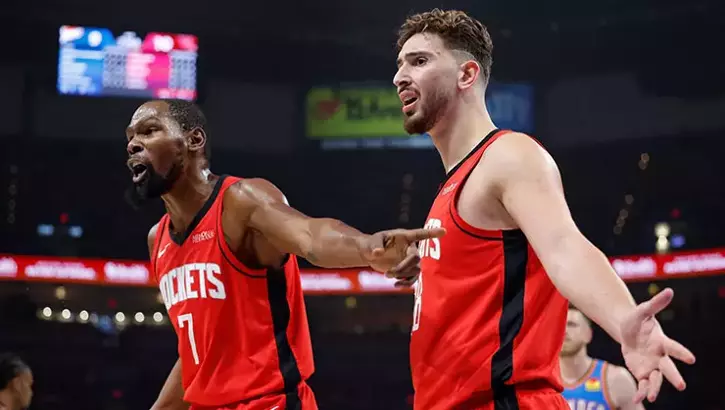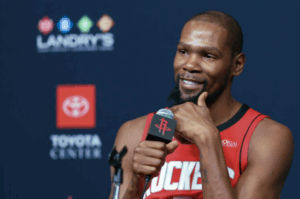


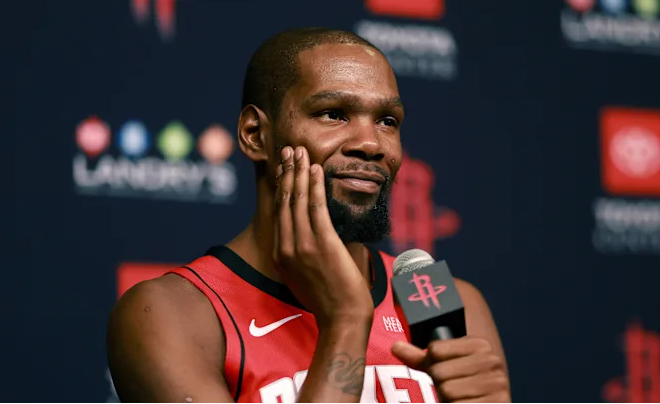
Kevin Durant is a hall-of-fame-level talent with an NBA journey spanning multiple teams and countless storylines. But when he steps onto the court in Houston for the 2025–26 season, he’ll experience something entirely new: he’s never before begun a season as a foundational building block, rather than a supplementary star.
In his prior stops, Durant often joined teams with established franchises or as the missing puzzle piece. This time, he enters a Rockets squad on the rise, but strained by the sudden loss of Fred VanVleet. That, combined with Houston’s evolving roster approach, sets up a season of firsts—and high expectations.
Below, I map out what exactly is different this time, what it might demand of Durant, and what Michigan-based fans and media should watch.
What He’s Never Faced: The Revolutionary Firsts
1. Starting Fresh in a Team Built Around Him
In past scenarios, Durant often joined a group that had core identity or direction (Oklahoma City, Golden State, Brooklyn). With Houston, he is part of a more foundational redefinition. The Rockets are in a transitional state—rebuilding identity, guard structure, and expectations around him.
That means Durant isn’t just another star—he’s a centerpiece in real time, with less margin for error.
2. Immediate Leadership Under Duress
Even though Durant has been a veteran leader before, this season demands he step into leadership immediately under adversity:
-
VanVleet’s injury leaves a vacuum in playmaking, defensive perimeter strategy, and veteran voice.
-
Houston’s young guards (Thompson, Sheppard, others) will need direct mentorship and example-setting.
-
Durant must balance his individual scoring load with organizational leadership in losses, adjustments, and chemistry building.
Never before has Durant had to carry quite so much organizational weight so quickly.
3. Rebuilding Without the Safety Net of a Superstar Backcourt
In prior teams, Durant often had complementary high-level stars (e.g. Curry, Irving, Harden) to absorb moments of failure or inconsistency. In Houston, the supporting cast will be younger, less proven, and in flux—especially with guard instability.
He will now face a roster environment where mistakes are magnified, space is tighter, and margin for error smaller. Managing that is different than coming onto an already contending team.
4. Defending a Title Window Without the Usual Anchor
Durant has chased championships, but rarely under these conditions: a young core, a new system, and key injuries. He’s now both the engine and the safety net.
In other words: he must lead not only in performance but in vision, culture, identity, and resilience. That burden is new.
How Houston’s Challenges Amplify the Uniqueness
VanVleet’s Void & Committee Strategy
Fred VanVleet’s ACL injury forces the Rockets to lean on a committee approach at point guard. Without a go-to floor general, Durant’s role in initiating sets, stabilizing rotations, and late-game decision-making is even more critical.
In many ways, he steps into partial point guard territory—something he hasn’t been asked to do so overtly in previous teams.
Youth & Unproven Guards
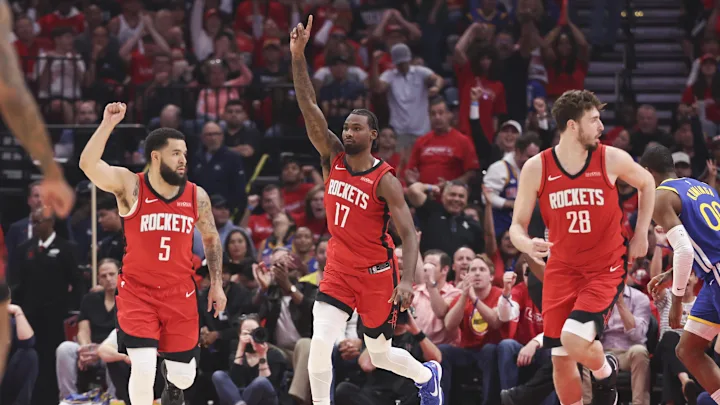
Houston’s guard rotation (Amen Thompson, Reed Sheppard, possibly Aaron Holiday) is still developing. Durant’s mentorship must mesh with on-court support. He’ll face nights where the supporting cast underdelivers, and he must manage that dynamically.
System Adjustments & Offensive Load
With VanVleet out, Houston may lean more on Durant in pick-and-roll, post-ups, and creative facilitation. That means more touches, more defensive attention, and more adaptability in reads he may not have been forced into previously.
Pressure Intensity & Expectation
Media, fans, and the league itself will closely scrutinize every move. In older environments, Durant had built reputational leeway. Here, that margin is narrower—failures or slow starts will be more heavily criticized.
What Detroit & Michigan Fans Should Zero In On
Matchups When Rockets Face Pistons
-
Can Detroit’s guards pressure Houston’s rotation?
-
Does Durant have to counter off-guard breakouts?
-
Will Detroit exploit any lack of cohesion in Houston’s backcourt?
Comparative Narrative of Star Roles
Detroit media loves exploring “star on new team” arcs. Durant’s transition now becomes a case study for how superstars impact rebuilding franchises—something Detroit might face if it ever retools around new cornerstones.
Lessons in Roster Construction & Timing
Watching Houston’s gamble gives Detroit’s front office watchers insight: when do you fully commit to a star? When do you protect flexibility? How much do you build around vs. beneath?
Storylines That Resonate
-
Can a veteran transcend system building?
-
Will youth rise fast enough to keep pace with star expectations?
-
How do injuries and roles evolve under pressure?
Potential Outcomes & Why This Season Matters
Best Case
Durant thrives under the burden. The supporting cast improves dramatically. Houston competes deep in the playoffs, validating the “centerpiece acquisition” vision.
Moderate Case
Houston is solid, makes playoffs, but stumbles in later rounds. Durant’s leadership shows promise, but the roster isn’t ready yet.
Worst Case
Guard instability derails offense. Chemistry struggles persist. Houston underperforms, pushing Durant’s longer-term commitment into question.
Closing Thoughts & Call-to-Action
Kevin Durant has lived many stories in the NBA. But this upcoming season in Houston offers a narrative he’s never lived: being the central architect of a team’s identity from day one, under challenge, with less margin for error.
It’s uncharted. It’s risky. But it could define not just Houston’s future—but Durant’s legacy too.
Detroit and Michigan’s basketball community should watch closely—not just as spectators, but as learning observers. When stars take on new roles, the lessons often ripple far beyond the orbit of one city.
If you like, I can now produce a Detroit-centric version (emphasizing what this means for the Pistons) or a short feature for newsletter/social media. Do you want me to do that next?