


The first streetlight went dark the night they unpacked the last box.
It happened quietly, without drama. Just a soft electrical click and a sudden pocket of shadow outside their new apartment window. Mia noticed because she was standing at the sink, rinsing a wineglass she hadn’t finished, staring out at a street she still didn’t recognize as hers.
“Did the power just flicker?” she asked.
Leo looked up from the couch, phone in hand. “Inside’s fine.”
She turned back to the window. The surrounding buildings glowed warm and steady, but the streetlight directly below them was dark now, leaving the sidewalk swallowed in shadow.
“Probably a coincidence,” Leo said, too quickly.
Mia didn’t answer.
They had moved here to start over. That was the phrase they used with friends, with family, with each other. A new city. New routines. New chances. As if geography could do the work honesty had failed to.
The boxes were labeled efficiently. Kitchen. Bathroom. Books.
None of them said Unresolved.
They slept that night without touching.
The second streetlight went out two days later.
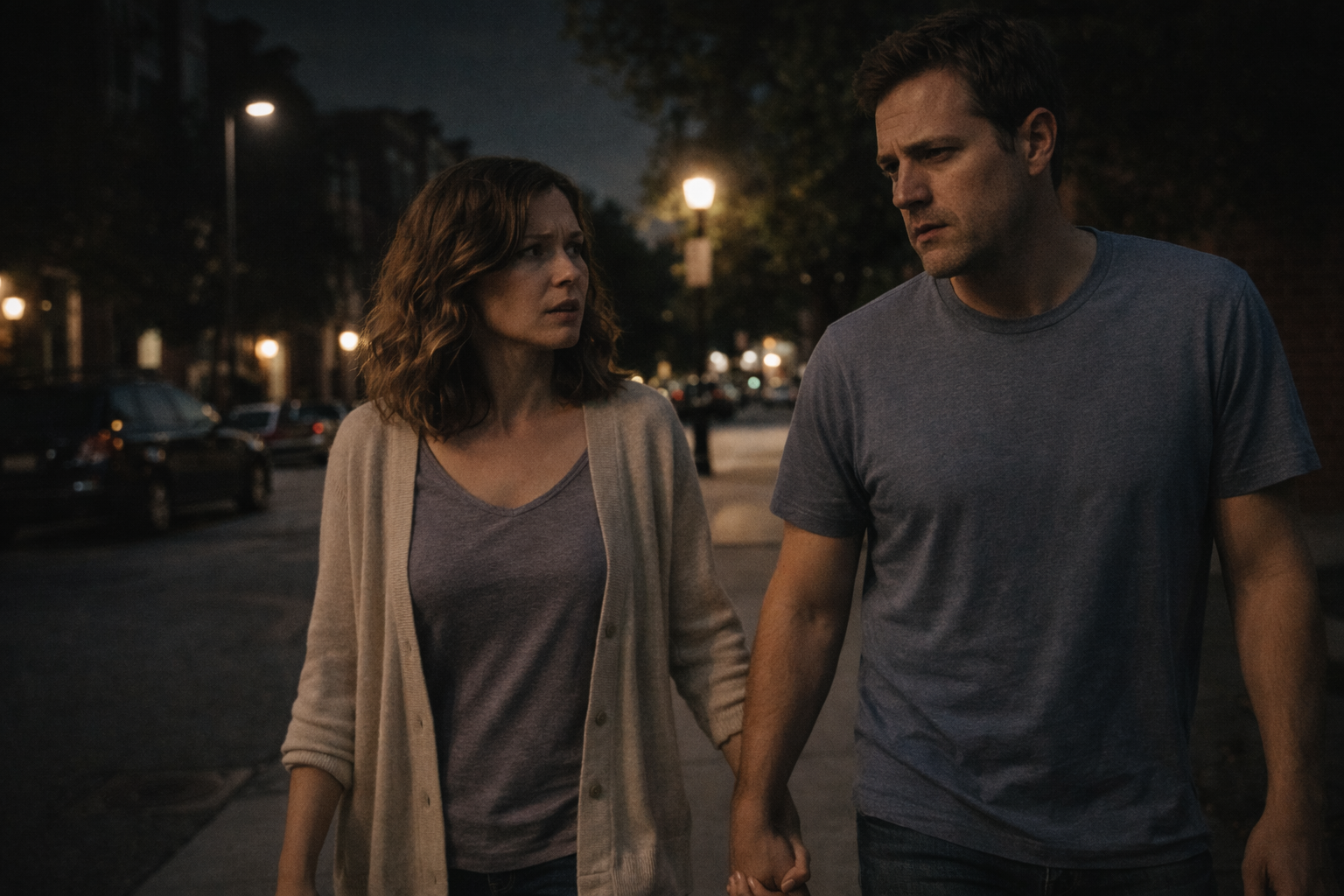
They were walking home from dinner, the air cool and unfamiliar, the city humming around them. Mia was telling a story about work—something light, deliberately unimportant.
“And then my boss said—” she paused as the light ahead of them snapped off, plunging the crosswalk into darkness.
Leo stopped walking.
“That’s weird,” he muttered.
Mia’s heart thudded. “That’s the second one.”
He laughed, but it sounded brittle. “You’re counting streetlights now?”
She crossed her arms. “I’m noticing patterns.”
They continued walking, footsteps echoing louder in the darkened stretch.
“You’re happy we moved, right?” Leo asked suddenly.
Mia opened her mouth.
Closed it.
“Of course,” she said.
The next streetlight down the block went out instantly.
They both stopped this time.
The city noise seemed to recede, as if the street itself were listening.
Leo swallowed. “Okay.”
Mia’s voice was quiet. “Okay what?”
“That wasn’t a coincidence.”
They tested it the next night.
Not intentionally at first—but inevitably.
They sat across from each other at a small table they’d bought secondhand, eating takeout from containers they hadn’t bothered to plate. The window behind Leo framed the street, glowing softly under the lamps.
“Do you miss it?” Mia asked.
Leo stiffened. “Miss what?”
“Our old life.”
He shrugged. “Not really.”
The streetlight flickered.
Held.
Then went dark.
Mia’s breath caught. “You’re lying.”
Leo slammed his fork down. “That’s not fair.”
Another light down the street dimmed.
Mia stood. “Then tell me the truth.”
He rubbed his face, exhaustion etched deep now. “I miss the version of us that didn’t feel like work.”
The lights held steady.
Mia’s eyes stung. “I miss feeling chosen instead of managed.”
Nothing changed.
They stared at each other, stunned.
“It reacts,” Leo whispered.
“To lying,” Mia said. “Or avoiding.”
They sat down slowly, like people learning new rules to gravity.
Over the next week, the city taught them.
White lies blacked out corners.
Half-truths dimmed entire blocks.
Silence left streets in shadow for days.
But honesty—raw, imperfect—kept the lights on.
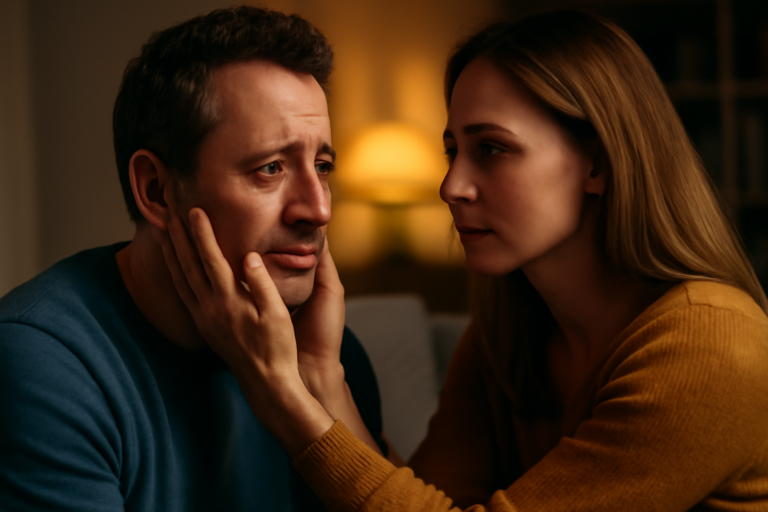
“I’m scared we waited too long,” Mia admitted one night.
The street stayed bright.
“I resent how easily you said we should leave,” Leo confessed another evening. “Like the problem was the place, not us.”
The lamps glowed warmer.
They learned to pause before answering. To feel for the truth instead of reaching for the safest response.
Some nights, the walk home was lit like a promise.
Other nights, they navigated darkness hand in hand, knowing exactly why.
The worst blackout came after the question they’d been avoiding.
“Did you ever think about leaving me?” Mia asked quietly as they stood at a crosswalk, waiting.
Leo hesitated.
The streetlight above them flickered violently, buzzing.
“Yes,” he said. “But I never stopped loving you.”
Every light on the block went out.
The city plunged into darkness so complete it stole their breath.
Cars slowed. People murmured. Somewhere, a siren wailed.
Mia’s knees weakened. “That wasn’t enough.”
Leo’s voice broke. “I know.”
They stood there in the dark, exposed, visible in a way light had never managed.
“I stayed because I was afraid,” Mia said. “Not because I was certain.”
A single streetlight flickered back on.
Leo nodded, tears shining. “I stayed because I hoped certainty would come later.”
Another light returned.
“I don’t want a marriage that survives on hope alone,” Mia said.
The block brightened.
Leo reached for her hand. “Then let’s choose it. Actively. Or let it go honestly.”
The last streetlight came back on, flooding the street with soft gold.
People exhaled. Traffic resumed.
The city moved on.
But something fundamental had shifted.
Months later, the streetlights rarely went out.
Not because they were perfect—but because they were attentive.
When darkness did come, it was brief. Understandable. Correctable.
One night, walking home under steady light, Mia smiled softly.
“Do you think the city will ever stop watching us?”
Leo squeezed her hand. “I think it already did.”
She looked around—the glowing sidewalks, the ordinary magic of a world functioning as it should.
“Good,” she said. “I’d rather we do the watching now.”
They walked on, illuminated not by illusion or escape—
but by the difficult, durable light of telling the truth where it mattered most.