


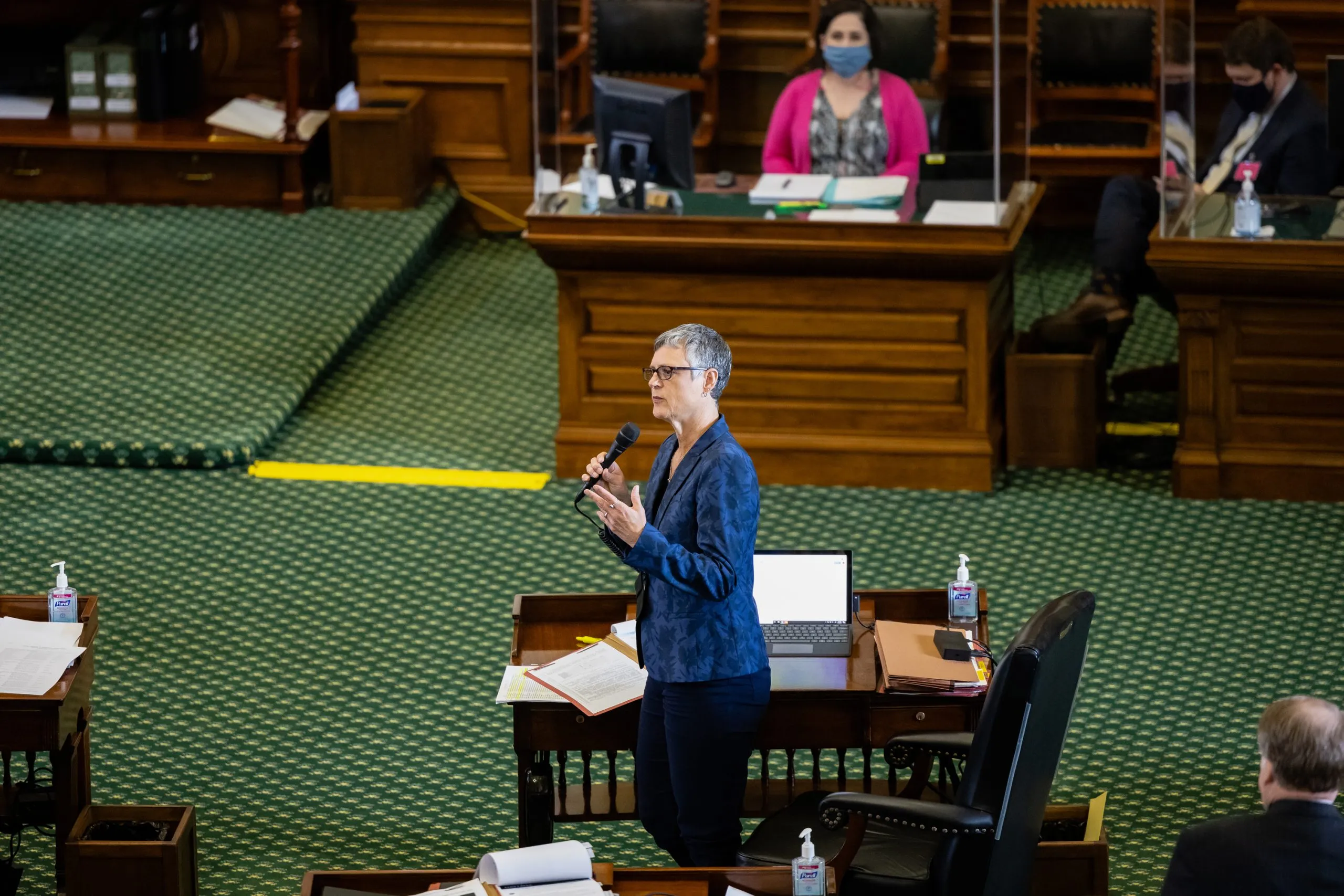
For years, Texas’ 10th Congressional District has been treated like political background noise — a stretch of land running from Austin to the northern edges of Houston, rarely making national headlines and rarely attracting candidates with genuine statewide influence. That silence ended the moment Sarah Eckhardt stepped forward. Her entrance into the race didn’t just add another name to a ballot. It detonated a political fault line.
Eckhardt is not a lightweight. She is not a placeholder candidate. She is not a name thrown into the ring to “keep things interesting.” She is a political force with deep experience, a sharp policy mind and a reputation for speaking her mind even when it ruffles feathers. And if early reactions mean anything, the district is about to witness one of the most unpredictable and ideologically charged races in years.
The first shockwave hit the moment she announced. People expected a state senator to eye statewide seats or high-profile roles, not a district that political analysts often label “quiet,” “stable,” or “safe enough.” But Eckhardt’s campaign rollout made one thing very clear: she isn’t running a quiet race, and this district isn’t as stable as everyone believes. In her early speeches, she framed the district as a sleeping giant — young, growing and increasingly frustrated with stale representation.
That message resonated instantly.
Residents across Austin’s west side, suburban families near Bastrop and rural voters outside Brenham picked up on something candidates often miss: Eckhardt actually understands the region’s identity crisis. Texas’ 10th isn’t one type of community. It is three or four, smashed together like puzzle pieces that don’t perfectly fit. Some parts are tech-driven and urbanizing fast. Others cling to agricultural roots. Others feel abandoned by the political class altogether. Most candidates talk to one slice of the district. Eckhardt is talking to all of them.
Her campaign strategy is simple and bold: stop treating voters like demographic categories and start treating them like people. She speaks to rural landowners about environmental protections in the same breath she speaks to Austin-area millennials about housing affordability. She tells Houston-adjacent commuters that infrastructure upgrades shouldn’t be fantasy items. She tells parents across the district that public education should not hinge on which side of a county line they live on.
But what sets her apart is her willingness to call out what she calls “performative politics,” the trend of politicians focusing on partisan theater instead of solving actual problems. In one speech, she told supporters that “Texans are exhausted from being props in someone else’s political show.” That line spread quickly through social media because it captured a sentiment voters rarely admit out loud: they are tired of feeling used.
Critics argue she’s running too idealistically. They say the district leans conservative and that her brand of pragmatic progressivism won’t gain traction. But that critique ignores a new political reality: suburban Texas is shifting. Not blue. Not red. Unpredictable. The kind of unpredictability that makes seasoned strategists nervous.
Eckhardt knows this. She isn’t trying to imitate national messaging. She’s building a campaign around local priorities — flooding relief, transportation bottlenecks, childcare gaps, rural broadband access, energy reliability. These are issues that cut across ideology. Issues that voters feel in their wallets and in their daily routines. She isn’t chasing cultural flashpoints. She’s chasing solutions.
That approach has begun attracting voters who normally avoid politics altogether. Teachers, young parents, small business owners, longtime homeowners rattled by insurance hikes, new residents priced out of the housing market — these are the voices at her town halls. Not hyperpartisans. Not Twitter warriors. Ordinary Texans who want leadership instead of noise.
Her opponents, sensing momentum, have already begun sharpening their attacks. They frame her as too progressive, too Austin, too reform-oriented. But those criticisms may miss the mark. The demographics of Texas 10 have shifted dramatically, and a candidate who can speak fluently to both urban and rural communities is rare. Eckhardt’s authenticity — her willingness to talk openly about policy tradeoffs, to acknowledge nuance instead of selling political fairy tales — may give her an edge in a district hungry for realism.
The biggest question is whether her message will resonate deeply enough to topple the incumbent. Political insiders aren’t ready to say it, but they’re thinking it: if any Democrat can flip this district, it’s Eckhardt. Not because she is the most ideological candidate, but because she is the most grounded.
Her campaign isn’t running on fear. It isn’t running on outrage. It’s running on the idea that Texans deserve leaders who act like adults.
That idea is gaining traction fast.
Whether Eckhardt wins or not, her candidacy has already shifted the political landscape. She has forced conversations that many officials in the state would rather avoid. She has energized voters who have long felt invisible. And she has turned a once-ignored district into a battleground that political analysts are now scrambling to reassess.
Texas 10 isn’t quiet anymore. And Sarah Eckhardt is the reason.