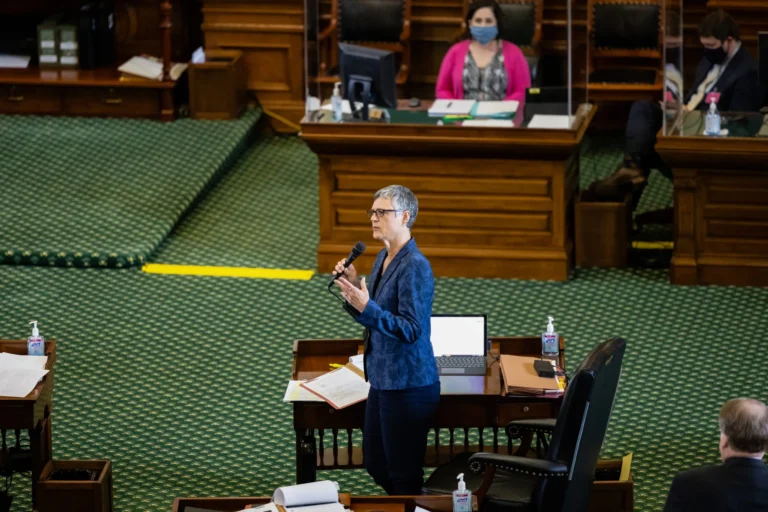




In a bold, controversial move, the Texas Tech University System has directed its institutions to revise teaching materials, syllabi, and curriculum so that classroom instruction aligns with a federal-level policy that recognizes only a male-female binary. The decision was issued through a system-level memorandum and immediately sparked backlash from free speech advocates, faculty members, and civil rights organizations.
This shift isn’t merely administrative — it strikes at the heart of academic autonomy, constitutional protections, and the future of how gender and identity are taught in higher education.
What the Directive Says & Its Legal Basis
The system’s chancellor instructed the universities to “review course materials, curricula, syllabi, and other instructional documents” to ensure they reflect federal and state obligations — specifically the idea that only two sexes exist. Institutions are to conform to a January executive order requiring the recognition of only male and female designations.
In support of the mandate, the chancellor cited a new Texas state law (HB 229) which defines “male” and “female” in purely biological terms tied to reproductive systems, with no accommodation for intersex, transgender, or nonbinary identities.
Despite the sweeping nature of that law, it does not explicitly regulate curricula, nor does it offer guidelines on how professors should teach regarding gender identity. The directive from Texas Tech effectively extends those definitions into classrooms by fiat.
Reactions & Concerns
Free Speech & Academic Freedom
Some legal and civil liberties observers have condemned the directive as “obvious censorship.” They argue that universities must be spaces for inquiry, debate, and the exploration of ideas — especially around contested social issues like gender. In forcing alignment with a narrow binary view, the policy appears to restrict which viewpoints can be taught or even referenced.
Critics warn that such mandates undermine the First Amendment and state constitutional protections for faculty and students. If instructors cannot teach concepts or frameworks that diverge from the official line, the classroom becomes an echo chamber rather than a forum.
Faculty & Institutional Tension
Many professors may find themselves caught between professional duty to intellectual integrity and compliance with institutional demands carried out from above. It creates internal pressure: do you teach according to your expertise and evolving research — or do you self-censor to remain in line?
Several faculty and student groups have spoken out, warning that the move damages the institution’s reputation and could chill academic talent from joining Texas Tech.
Administrative Backing & Enforcement
The chancellor’s memo frames compliance as a legal obligation, saying “in your role as a state employee, compliance with the law is required.” Faculty were told to consult deans and provosts with questions. The memo suggests ongoing monitoring and enforcement; those who deviate may face institutional consequences.
Broader Context: Policy, Politics & Precedent
The Trump Executive Order & State Endorsement
The referenced executive order, signed early in a hypothetical second term, mandates that the federal government recognize only two sexes. Texas’ governor followed by directing state officials to adopt that view, calling it “biological reality.”
This presents a convergence of federal executive posture and state legislative power — a layering that gives university systems cover in claiming they must comply with both levels of government, even where curricula traditionally rested in academic autonomy.
Science, Identity & Institutional Contradictions
Decades of medical, psychological, and sociological research recognize that sex and gender exist on spectra; intersex individuals, transgender identities, and gender diversity are well-documented. The directive’s stark binary approach conflicts with a broad consensus in the scientific and academic community.
It also raises contradictions: can faculty in biology, psychology, gender studies, or sociology teach the full range of contemporary research on gender? Or will they must omit or sanitize those perspectives to conform?
Institutional Precedents
This move in Texas echoes similar pressures in other states, where legislatures or governors seek to control public university teachings on race, history, sexuality, or identity. The question is whether this is the next front in a wider national effort to regulate curriculum content from state capitals.
What Happens Now: Scenarios & Potential Litigation
Scenario 1: Full Compliance & Chilled Debate
Universities systematically revise materials. Faculty tone down or remove sections on gender diversity. Students lose exposure to dissenting or emerging theories. Over time, academic richness erodes under compliance.
Scenario 2: Pushback & Negotiation
Faculty senates, academic associations, or students challenge the mandate internally. Some content might be preserved under carve-outs, footnotes, or exemptions. A tense balance develops between permitted content and suppressed ideas.
Scenario 3: Legal Challenge & Judicial Review
Civil rights or academic freedom organizations may file lawsuits, arguing that the directive violates constitutional protections or statutory academic autonomy. Courts may ultimately block enforcement, uphold parts, or require revisions.
Potential Trouble Spots
-
Definitions of “compliance obligations” may be vague, giving administrative overreach.
-
Enforcement might be applied inconsistently or punitively.
-
Academic programs — such as gender studies, queer theory, or courses in sexuality — might be targeted.
-
Talent drain: faculty unwilling to work under these constraints may leave, reducing institutional quality.
Impact & Takeaways for Other Universities (Including Michigan)
-
Public universities in other states should watch this closely as a test case: when do institutional mandates overtake academic freedom?
-
Michigan colleges may be asked by policymakers to conform to similar rules in politically charged climates. Understanding how Texas Tech handles it provides a roadmap.
-
Faculty associations and academic leadership should prepare policies or legal defenses protecting curricular autonomy.
-
Students must stay alert; curriculum changes may quietly shift what is or isn’t taught in sensitive fields.