

A single Halloween photograph is now fueling a broader political storm. Following a fatal shooting at a Dallas ICE facility, critics have spotlighted a Texas Democrat’s past decision to dress as a blood-smeared Donald Trump — framing it as part of a pattern of incendiary rhetoric. Supporters say it was political theater; detractors say it’s evidence that extremes in public imagery can have real-world consequences.
In this piece, we explore the backdrop of the ICE shooting, examine the costume controversy, and analyze how symbols, rhetoric, and accountability intersect in today’s political climate.
The Dallas ICE Shooting: Catalyst for the Storm
On September 24, 2025, a sniper attack targeted an Immigration and Customs Enforcement (ICE) facility in Dallas. The shooter fired down from a rooftop into the facility’s entry zone, killing a detainee and injuring at least two others before taking his own life. Authorities recovered ammunition inscribed with “ANTI-ICE,” leading investigators to consider ideological motivation.
The incident escalated national debates over political rhetoric, as politicians and commentators asked whether inflammatory language — particularly that which demonizes law enforcement or government agencies — can contribute to real violence.
The Costume Controversy: Bloodied Trump as Political Statement
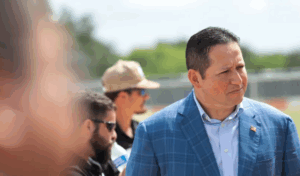
The focus soon turned to Bobby Pulido, a Democratic congressional candidate from Texas and former Tejano music star. In archived campaign materials, Pulido was shown donning a bloody Donald Trump Halloween costume — complete with crimson makeup — for a 2015 image posted online.
Critics point out that the historical costume, in light of the Dallas shooting, raises serious questions: was this simply edgy political satire, or symptomatic of a culture of escalating symbolic violence?
The costume is not a new revelation, nor was it on the campaign trail this year — but when juxtaposed with a real attack, it has become a focal point for those demanding greater responsibility from public figures.
Rhetoric, Symbolism & Accountability
When Does Symbolism Become Danger?
Political theatricality — costumes, provocative images, exaggerated metaphors — has long been part of campaigning. But the boundary between metaphor and menace blurs when individuals act violently. A costume mocking or attacking a figure or institution may seem benign until someone uses it as inspiration.
Critics argue that when public figures don violent imagery and then criticize officials or law enforcement, patterns of escalation can normalize extreme thinking.
The Defense: Artistic Freedom & Context
Supporters of Pulido push back, arguing that a decade-old costume is not a political threat. They emphasize freedom of expression, satire, and the fact that Pulido condemned violence multiple times, including after the shooting of conservative figure Charlie Kirk.
They also note that the costume was posted during a period of political critique, not in the context of law enforcement targeting or calls for actual violence.
Responsibility vs. Culpability
The distinction matters: no one who criticizes symbolic rhetoric is necessarily blaming Pulido for the shooting. But critics assert that leaders bear responsibility to avoid amplifying rage, fear, or dehumanization. Symbolic violence — imagery that inflames or demonizes — can foster environments where actual violence slips in.
Political Fallout & Messaging
-
Republicans seized the moment. A former Republican Congresswoman called Pulido’s costume part of a broader pattern of “hateful rhetoric” and urged Democrats to police their own ranks.
-
The National Republican Congressional Committee (NRCC) publicly condemned Pulido’s past imagery and rhetoric, calling it “disqualifying.”
-
Pulido has not directly responded to these attacks, though he previously called for tone-deescalation in political dialogue.
Whether or not the costume is decisive, it feeds into a larger campaign narrative: who in politics gets to use dramatic imagery? And where do we draw the line between criticism and provocation?
Broader Implications: What This Reveals
The Climate of Political Symbolism
We live in an era where visual symbolism — memes, costumes, theatrical stunts — are often more potent than policy speeches. The Pulido case is a reminder that when such symbolism targets leaders or institutions, it enters dangerous terrain.
Rhetoric as Risk
This moment underscores the argument that rhetoric — how we talk, frame, depict — is not incidental. Words, images, and even costumes can shape the emotional temperature of political discourse. When violent events follow, scrutiny intensifies.
Electoral Filtering & Public Trust
Voters, especially in volatile regions, may demand that Congress candidates prove they can temper emotion with responsibility. Imagery that once seemed edgy may now be a liability in a heightened environment.