


The Houston Rockets entered the 2025 preseason with uncertainty. With Fred VanVleet sidelined by a serious injury, and questions surrounding the frontcourt rotation, one unexpected development may have changed the trajectory: Dorian Finney-Smith, a key free agent signing, is expected to miss the start of the season due to ongoing recovery from ankle surgery.
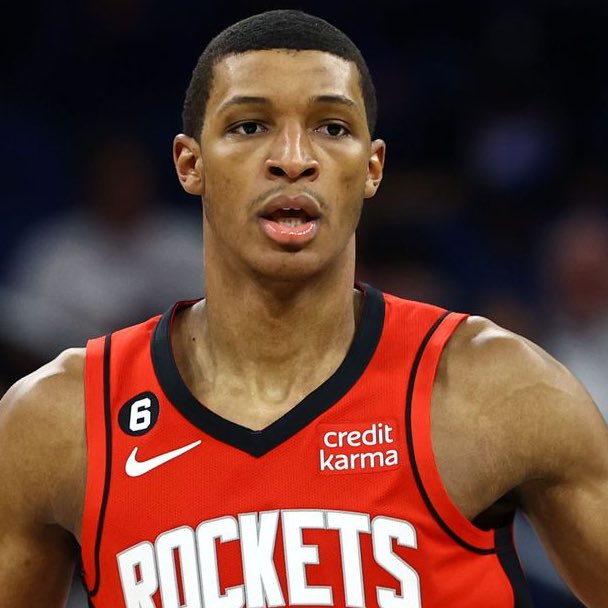
This injury opens the door for Jabari Smith Jr. to step back into the starting power forward slot — a role many felt should have been his long ago. While the loss of VanVleet already forced adjustments, the absence of Finney-Smith accelerates decisions about lineup configurations, offensive spacing, and long-term direction.
In this article, we unpack what the injury means for Smith, how the Rockets might reconfigure their roster, what risks and benefits lie ahead, and how this moment could define both his and Houston’s next season.
The Backdrop: VanVleet’s Injury & Rotation Instability
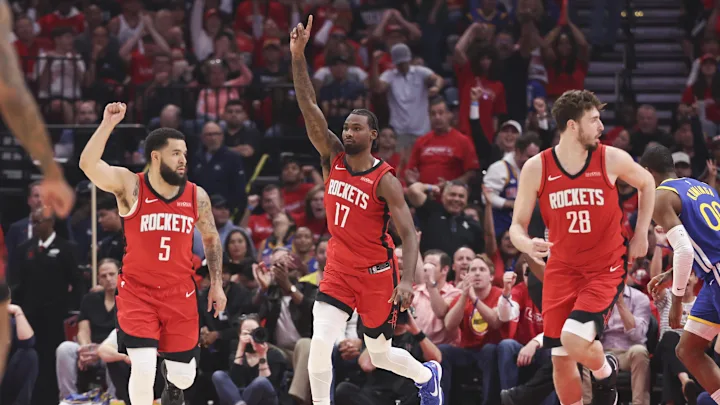
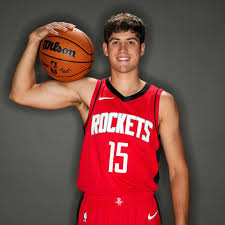
The Rockets’ offseason and preseason have been marked by turbulence. Fred VanVleet’s ACL injury removed their veteran, stabilizing playmaker from the backcourt, forcing younger guards like Amen Thompson and Reed Sheppard into greater responsibility. That shift alone was significant.
Then came the news about Finney-Smith. A critical piece in projected lineups — valued for his defense, wing versatility, and floor spacing — he now faces a delayed start as he recovers from surgery. Without him, Houston’s depth at forward is thinner, increasing pressure on players like Smith to assume starter-level roles.
Prior to this injury, the Rockets’ coaching staff had left the fifth starting spot open in training camp, evaluating options between Smith, Finney-Smith, Tari Eason, and even Steven Adams in small-ball lineups. But with one contender sidelined and another injured, the path narrows.
Jabari Smith Jr.: From Bench to (More Likely) Starter
College to Pro: Expectations vs. Reality
Smith entered the NBA with high expectations. At Auburn, he projected as a modern forward mixing 3-and-D worthiness with athleticism. In Houston, he showed flashes of scoring, rebounding, rim protection, and shooting.
However, he has also faced growing pains: inconsistency, questions about his ball-handling, occasional defensive lapses, and adaptation in spacing-heavy NBA systems. In recent seasons, he drifted between starter and bench roles, especially when matchups or injuries forced lineup changes.
How the Injury Changes the Equation
With Finney-Smith unavailable early, and VanVleet out of full strength, Smith’s opportunity to reclaim and solidify a starting role strengthens. Now, rather than being one of several options, he emerges as a default — and perhaps rightful — choice for power forward in many lineups.
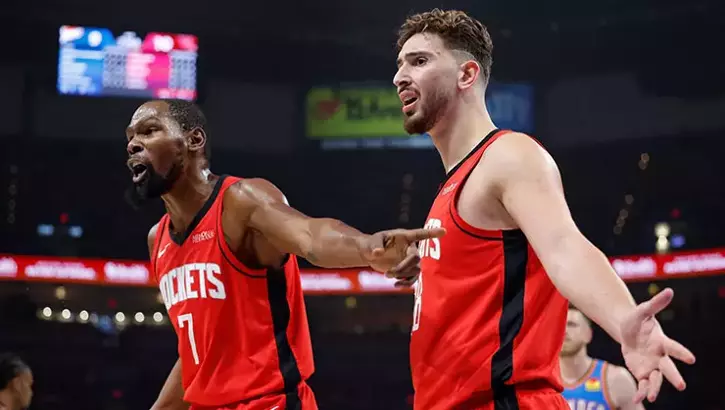
If he enters training camp and exhibits cohesion with Amen Thompson, Kevin Durant, Alperen Şengün, and others, it will be hard to justify demoting him once all are healthy. The Rockets could run heavier with three forwards, or stagger minutes to protect matchups—giving Smith flexibility to stay.
Projected Role & Responsibilities
-
Primary spacing forward: He will be expected to hit catch-and-shoot threes, stretching the defense to open driving lanes.
-
Rebounding & rim protection: His size and length make him a candidate to guard multiple positions and contest shots.
-
Secondary creator: While not a full-time playmaker, the offense may leverage him in dribble-hand-off sets or pick-and-pop actions.
-
Rotational adjustments: During small-ball moments, Smith’s versatility may allow him to play as the four while others shift.
If Finney-Smith returns, the staff may stagger minutes or rest one forward, but Smith could maintain starter status if chemistry holds.
Benefits & Opportunities
Confidence & Identity
Regaining a more stable starting role may bolster Smith’s confidence and clarity of purpose. Rather than bouncing in rotation, he can build rhythm, consistency, and leadership presence.
Increased Exposure & Development
More minutes against top opposition accelerates development. He’ll get tougher matchups, more high-leverage situations, and sharper learning curves.
Floor Spacing Improvement
Having one more floor-spacing forward (without Finney-Smith initially) is critical for a Rockets team built around shooters, slashing, and spacing. Smith’s three-point ability can unlock interior scoring options.
Organizational Signal
Investing in Smith as a starter signals to the fanbase and league that he remains a core piece of Houston’s rebuild. It reinforces trust in his ceiling and alignment with team direction.
Risks & Challenges
Overexposure of Weak Areas
If Smith struggles with consistency, ball-handling under stress, or matchup vulnerabilities, those deficiencies become magnified in starter-level minutes. Opponents will test him more often.
Confidence Volatility
Early failures (missed threes, turnovers, defensive breakdowns) in a visible role can affect confidence and public perception. The team must support him through rough patches.
Return of Finney-Smith
When Finney-Smith is healthy, decisions about who starts and how to balance rotations will be delicate. If the insertion is forced without chemistry, it may cause friction or benching.
Load Management & Fatigue
As starter-level minutes rise, fatigue, injury risk, and slippage become concerns. The coaching staff must monitor his conditioning and workload.
Coaching & Lineup Strategies
To maximize Smith’s success, Houston’s coaching staff might consider:
-
Staggered lineups: When Finney-Smith returns, avoid mass changes. Rotate combinations where Smith plays alongside Durant or Thompson.
-
Matchup-based flexibility: Use Smith in favorable defensive matchups; occasionally rest him against stronger forwards.
-
Load management: Carefully distribute minutes, especially early in the season, to maintain freshness.
-
Defensive support strategies: Use scheme help (switches, double teams) when Smith slides into tough matchups.
-
Off-ball roles for relief: Some lineups may shift Smith to catch-and-shoot or spacing roles to reduce decision burden.
-
Mentorship & communication: Align expectations publicly and privately to reduce pressure and allow room for growth.
Historical & Comparative Context
Several young forwards have navigated similar transitions:
-
Brandon Ingram: Gained confidence and production when given stable starter roles rather than constant bench shifts.
-
Mikal Bridges: Sharpened his game once trusted to start rather than always rotated.
-
Pascal Siakam: Excelled when given structured roles despite earlier deployment as a Swiss-army tool.
These cases show that trust and consistency often unlock growth more than frequent shuffling.
What to Watch in 2025–26
-
Smith’s three-point percentage under starter-level volume
-
Turnover-to-assist ratio, especially in creation sets
-
Defensive matchups and any matchup targeting by opponents
-
Minutes distribution early in season
-
His chemistry with Amen Thompson, Durant, and Şengün
-
How the rotation adjusts when Finney-Smith returns
If by midseason he maintains starter-level performance and positive splits, the injury may vindicate this early opportunity.
Conclusion
While injuries are undesirable, the setback to Dorian Finney-Smith gives Jabari Smith Jr. a renewed pathway to the starting role many believed should be his. In adversity lies a chance: to set a tone, earn confidence, and show that potential doesn’t wait.
But opportunity is just that — not a guarantee. For Smith to thrive, Houston must structure his role carefully, shield him when necessary, and maintain a winning system around him. If done right, this moment could mark the turning point in his career — and perhaps in the Rockets’ direction.
FAQ
Q: Which injuries led to this opportunity?
Fred VanVleet’s ACL injury and Dorian Finney-Smith’s ankle surgery delay combine to open the forward role for Smith.
Q: What role is Smith expected to fill?
Likely starting power forward, contributing spacing, rebounding, defensive versatility, and occasional creation.
Q: Could Finney-Smith take the role back later?
Yes, but if Smith performs strongly, coaches may keep lineup continuity and stagger returns.
Q: What are the key risks?
Overexposure of weaknesses (defense, ball-handling), confidence erosion if mistakes mount, and fatigue from heavy minutes.
Q: What must Houston do to support him?
Staggered lineups, load management, matchup shielding, clear expectations, and maintaining flexibility in rotations.