


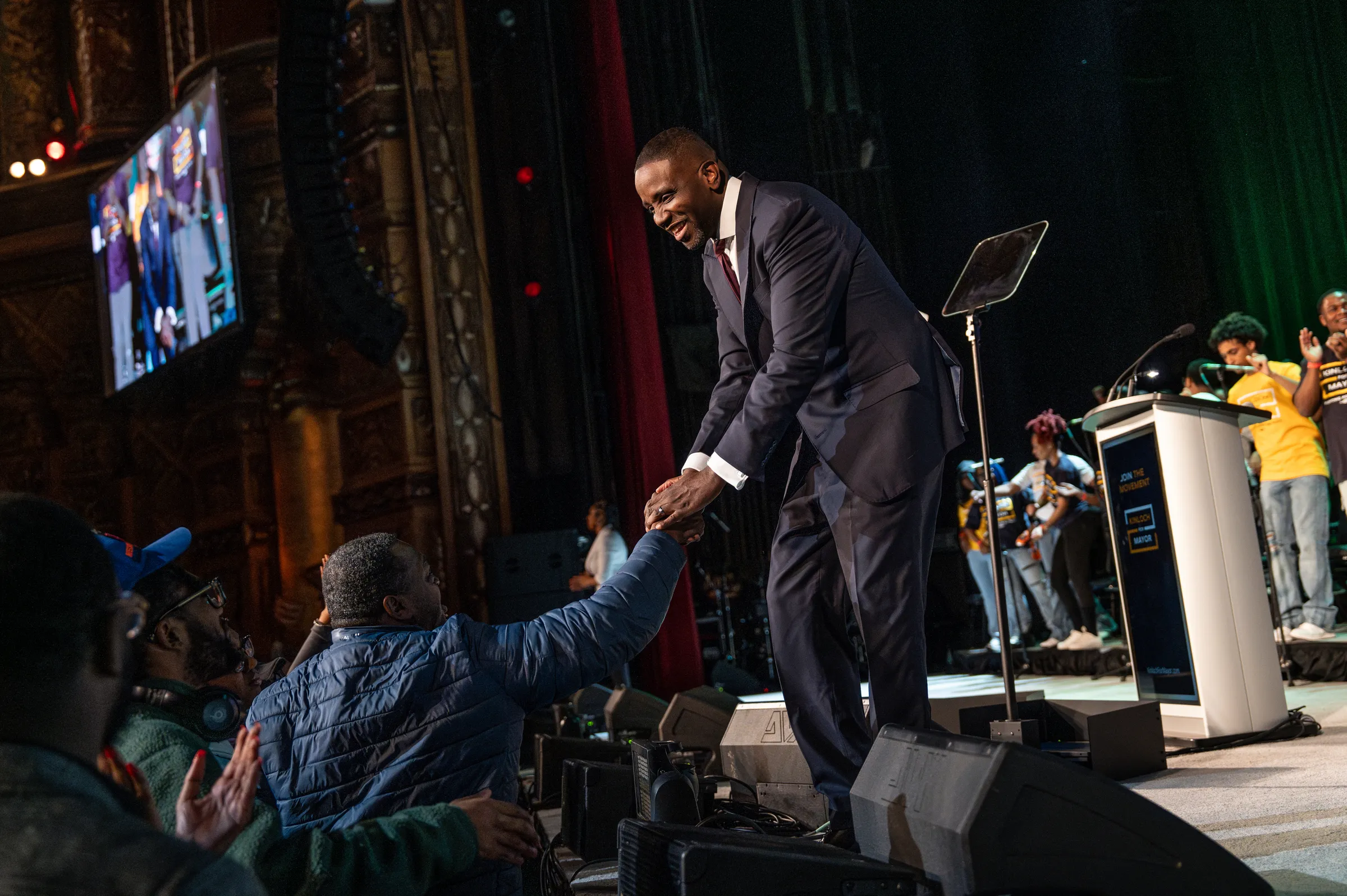
In the race for Detroit’s mayor, Reverend Solomon Kinloch presents a vision rooted in community empowerment and practical solutions. As a political newcomer, Kinloch challenges incumbent City Council President Mary Sheffield, emphasizing the need for affordable housing and effective crime reduction strategies. His platform seeks to address the city’s most pressing issues with a focus on inclusivity and sustainability.
Background & Context: Kinloch’s Rise in Detroit
Solomon Kinloch, the pastor of Triumph Church, has been a prominent figure in Detroit’s religious and community circles. Under his leadership, the church has grown significantly, reflecting his deep connection to the city. Kinloch’s decision to enter the mayoral race stems from his desire to bring about tangible change, leveraging his experience in community service to tackle systemic challenges.
Detroit, once a thriving industrial hub, has faced economic decline, leading to issues like blight, unemployment, and a strained public safety infrastructure. Kinloch’s campaign aims to revitalize neighborhoods, restore public trust, and create opportunities for all residents.
The Core Story: Affordable Housing and Crime Reduction
Affordable Housing: A Pathway to Stability
Kinloch’s approach to affordable housing goes beyond traditional policies. He advocates for a comprehensive strategy that includes:
-
Neighborhood Revitalization: Transforming vacant properties into livable spaces, ensuring every house has a family.
-
Down Payment Assistance: Expanding programs to make homeownership accessible to more Detroiters.
-
Affordable Housing Development: Prioritizing projects that cater to low and moderate-income families.
Kinloch critiques the current administration’s definition of “affordable housing,” pointing out that rents exceeding $1,800 are out of reach for many residents. He calls for a more aggressive stance to meet the city’s housing needs.
Public Safety: Addressing Crime with Community-Based Solutions
While acknowledging recent declines in crime rates, Kinloch emphasizes that many Detroiters still feel unsafe. He proposes:
-
Community Policing: Strengthening the relationship between law enforcement and residents.
-
Youth Engagement: Implementing programs to prevent youth involvement in crime.
-
Neighborhood Safety Initiatives: Enhancing lighting, surveillance, and community patrols.
Kinloch opposes the use of the National Guard in urban policing, citing historical trauma from the 1967 uprising. He believes in empowering local police and community members to collaboratively address safety concerns.
Analysis & Implications: A Holistic Approach to Urban Challenges
Kinloch’s platform presents a holistic approach to urban governance. By intertwining housing and public safety, he addresses the root causes of many of Detroit’s challenges. His emphasis on community involvement and local solutions aims to foster a sense of ownership and pride among residents.
However, implementing such comprehensive policies requires overcoming significant hurdles, including budget constraints, political opposition, and the need for interdepartmental coordination. Kinloch’s ability to navigate these challenges will be crucial to the success of his proposed initiatives.
Local & Human Impact: Voices from the Community
Residents of Detroit express a mix of hope and skepticism regarding Kinloch’s proposals. Longtime community members appreciate his deep ties to the city and his commitment to its revitalization. However, some question the feasibility of his ambitious plans, given the city’s financial and infrastructural limitations.
Community leaders stress the importance of sustained engagement and accountability. They emphasize that while Kinloch’s vision is compelling, its success will depend on transparent governance and active participation from all sectors of society.
Broader Trends & Lessons: The Role of Faith-Based Leadership in Politics
Kinloch’s candidacy highlights the growing influence of faith-based leaders in political spheres. His campaign reflects a broader trend where religious figures leverage their community standing to advocate for social change. This shift underscores the potential for cross-sector collaboration in addressing complex urban issues.
The integration of faith-based perspectives into public policy discussions can enrich debates, bringing ethical considerations and a focus on community welfare to the forefront. Kinloch’s approach may inspire other cities to explore similar models of leadership.
What Happens Next: The Path Forward for Detroit
As the mayoral election approaches, Kinloch’s campaign will likely intensify, with a focus on:
-
Community Outreach: Engaging with residents to refine policies and build trust.
-
Policy Development: Crafting detailed plans for housing and public safety initiatives.
-
Coalition Building: Collaborating with local organizations, businesses, and government agencies to garner support.
The outcome of the election will determine whether Kinloch’s vision becomes a reality or if Detroit continues on its current trajectory. Regardless of the result, his candidacy has sparked important conversations about the future of the city.
Conclusion: A Vision for a Reimagined Detroit
Solomon Kinloch’s mayoral campaign offers a vision of Detroit that is inclusive, safe, and prosperous. By focusing on affordable housing and community-centered public safety, he seeks to address the foundational issues that impact residents’ daily lives. His approach challenges traditional political paradigms, advocating for a model of governance that is deeply rooted in community engagement and ethical leadership.
As Detroit stands at a crossroads, Kinloch’s candidacy serves as a reminder of the power of grassroots leadership and the potential for transformative change when communities unite for a common purpose.