


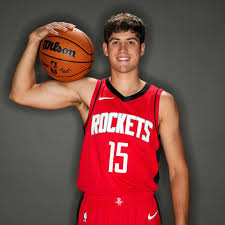
When the Houston Rockets selected Reed Sheppard with the third overall pick in the 2024 NBA Draft, they did so believing he was a linchpin in their future. At Kentucky, he appeared to combine shooting, basketball IQ, and defensive promise into a tantalizing package. But now, with a string of injuries in the backcourt and a thin margin for error in their rebuild, the Rockets find themselves handing Sheppard a crucible no rookie should face.
He’s being thrust into a starring role before he’s fully prepared—asked to carry enormous expectations on offense, serve as a primary playmaker, and mask defensive lapses, all while developing. In doing so, the organization may be doing more harm than good to one of its most prized young assets.
This article explores how Sheppard’s position has become precarious, what the underlying data and performance metrics suggest, and what the Rockets (or any team in a similar situation) could do to optimize both team success and player development.
The Build-up: From Kentucky Star to NBA Rookie
Sheppard came into the NBA with strong pedigree. At Kentucky, he was lauded for his elite three-point shooting (he once hit over 50% from three in college), dependable decision-making, and steady presence. He entered the draft with expectations of becoming a foundational guard who could space the floor and contribute across the board.
However, transition to the NBA is rarely linear. Through his rookie season, Sheppard saw limited rotation time, averaging around 12–13 minutes per game, with modest production: 4–5 points per game, coupled with challenges in consistency, defensive matchups, and perimeter shooting.
His shooting split from beyond the arc dipped significantly from his college levels, and his defensive footprint—hampered by size, lateral quickness, and adjustment to NBA speed—was exposed in switch-heavy lineups.
Those early growing pains are not unusual. Many rookies struggle with the leap to pro-level defenses, quicker ball movement, and carrying mental load under pressure. But the difference in Sheppard’s case is what the Rockets now expect of him.
The Shift: VanVleet’s Injury & Sheppard’s Mandate
In the offseason, the Rockets believed their backcourt would include a mix of experience and youth—Fred VanVleet anchoring leadership and ball-handling alongside James Harden or newer pieces, with Sheppard growing into a role over time. That balance allowed for gradual onboarding.
But when VanVleet suffered a serious injury that ruled him out for months, that plan evaporated. The Rockets were left without their veteran point guard, and in response they elevated Sheppard (alongside Amen Thompson) into roles of primary playmaking and offensive responsibility.
Now, instead of coaching staff methodically rolling him into the rotation, Sheppard is expected to be a lead guard in many lineups—creating offense, initiating transitions, knocking down threes, navigating pick-and-rolls, and masking his defensive vulnerabilities.
This shift may have been unavoidable given roster constraints, but it forces him into a trial by fire: rapid adaptation under intense scrutiny.
The Impossible Position: What He’s Being Asked to Do
Let’s break down the core tensions in his assignment:
Offensive Expectations vs. Defensive Readiness
-
Three-point shooting pressure: As a perceived sharpshooter, Sheppard must hit enough threes to space the floor. But in the NBA, getting open looks is harder, defenses are tighter, and the mental burden of needing to “justify” position can weigh heavily.
-
Playmaking burden: He is now expected not just to shoot, but to initiate offense—reading defenses, making decisions under pressure, managing pace. But that’s a different skill set than catch-and-shoot or off-ball spacing.
-
Defensive challenges: His frame and lateral quickness are less forgiving at the pro level. When he’s forced to guard quicker, more powerful guards, mistakes can be magnified and exploited.
-
Confidence fragility: If early failures happen—missed threes, turnovers, defensive breakdowns—that could shake confidence, which is hard to rebuild under performance demands.
In short: if he excels, the narrative is “future cornerstone.” If he stumbles, critics may point to being rushed, unprepared, or exposed.
Data & Performance Patterns
To better understand how steep the climb is, consider these patterns:
-
Sheppard’s rookie 3-point percentage fell to the low-30s.
-
His minutes were limited, reducing opportunities to find rhythm and confidence in game flow.
-
In the G-League, he displayed flashes—higher usage, more aggressive scoring, confidence in decision-making—but non-NBA environments differ.
-
Defensive metrics (like opponent three-point percentages when guarded) suggest he is a net liability in certain matchups.
-
Turnover rate in pressure minutes tends to spike when decision load increases, particularly without veteran support.
These metrics support the notion that while he has potential, the jump from rotational role to lead guard is steep. It’s not just about raw talent; it’s about the system, usage mix, and margin for error.
The Risk: Development Stunting or Boom Growth
When a team rushes a young player into too much responsibility too early, several risks emerge:
-
Stunted growth
The player may retreat, lose confidence, and be boxed into limited roles rather than evolving. -
Role confusion
Being asked to do everything (shoot, pass, guard) can prevent mastery in any one area. -
Overexposure of flaws
Weaknesses (defense, turnovers, shot consistency) become magnified under high usage, inviting opponent exploitation.
But there’s another side: high-pressure exposure can accelerate growth if well supported—learning from mistakes, building resilience, adapting faster.
The key is whether the supporting structure is there: coaching, mentorship, system flexibility, and buffer roles.
What the Rockets Can Do to Help
To balance the gamble, the Rockets can adopt several practices:
Controlled usage
Even in extended roles, modulate his usage in tough matchups or heavy minutes. Allow low-pressure minutes where mistakes can be absorbed.
Pair with stabilizing veterans
Surround him with experienced playmakers who can shoulder control when necessary, reducing decision load.
Incremental role ramp
Continue giving him off-ball roles, catch-and-shoot opportunities, transition minutes, half-court spacing duties—so he doesn’t feel every possession is for creation.
Defensive scheme support
Use switching, help defense, or matchups where he guards smaller or less mobile wings to limit exposure.
Mental management & confidence building
Emphasize growth mindset: allow bad games, publicly support him, give rest periods, and reinforce that the process is not measured daily but over months and seasons.
Monitoring and feedback loops
Track advanced metrics of shot quality, turnover rate under pressure, defensive shot contest success, and adjust role accordingly.
If done thoughtfully, missteps early may become teaching moments rather than career traps.
Historical Comparisons & Precedents
Sheppard’s situation echoes past young guards thrust into leadership:
-
Ben Simmons was given heavy burdens early before all his skills fully matured—causing stress and inconsistency.
-
Lonzo Ball had early responsibility but defensive growth lagged and confidence eroded.
-
Luka Dončić, by contrast, was molded in a system that protected and scaled with him—but his situation is much rarer and harder to replicate.
The difference lies not in talent but in structural patience, role definition, and support. Some succeed under pressure; many crack.
Narrative Stakes: Franchise Future & Fan Expectations
This is more than just one player’s development. For the Rockets:
-
Sheppard is part of the foundation of their future core.
-
Fans and media will evaluate his performance as a barometer for the rebuild.
-
A failed rookie year may invite calls for trading picks, changing direction, or pressing other rookies.
-
For Sheppard personally, early narrative (success or failure) will shape his career trajectory, contract leverage, and psychological arc.
Too much expectation too soon makes little room for error.
What to Watch in 2025–26
-
How Sheppard’s three-point percentage trends over the season
-
Turnover rate and points per possession when he has ball handling duty
-
Minutes in “safe zones” (catch-and-shoot, secondary playmaking) vs. high-pressure creation
-
Defensive assignment mapping: are coaches sheltering him or exposing him?
-
Confidence signals: bench demeanor, shooting posture, willingness to take tough shots
-
Adjustments midseason—whether coaches ease load or continue pushing
If he shows steady improvement rather than explosive early production, that may be the sign of sustainable growth.
Conclusion
By pushing Reed Sheppard into a starring role prematurely—amid injuries and roster constraints—the Rockets have placed him in a crucible few young players survive unscathed. The potential payoff is real: if he rises to the challenge, he becomes a foundational piece. But the downside is steep: hastened decline, confidence collapse, or being pigeonholed.
This season will test not just Sheppard’s talent, but the Rockets’ commitment to long-term player development. Whether they nurture him wisely or burn him out may well shape both his career and the rebuild’s credibility.
FAQ
Q: Why is Reed Sheppard’s role so challenging now?
Because injuries removed veteran guards, pushing him prematurely into heavy playmaking and scoring duties before defensive and decision skills fully matured.
Q: Did he struggle in his rookie year?
Yes, his minutes were limited, shooting dipped from expectations, and defensive challenges exposed weaknesses.
Q: What is an ideal development path?
Gradual ramp-up: mixed roles, limited pressure, paired with veteran support, defensive schemes to shield weaknesses, and confidence-building opportunities.
Q: Can this early role backfire?
Yes, if mistakes mount, confidence wanes, or he feels exposed—not supported—leading to regression or being pigeonholed into limited roles.
Q: What’s the best-case scenario?
He adapts, improves under real-game pressure, emerges as a reliably shooting, playmaking guard, and becomes a core piece of Houston’s rebuild.