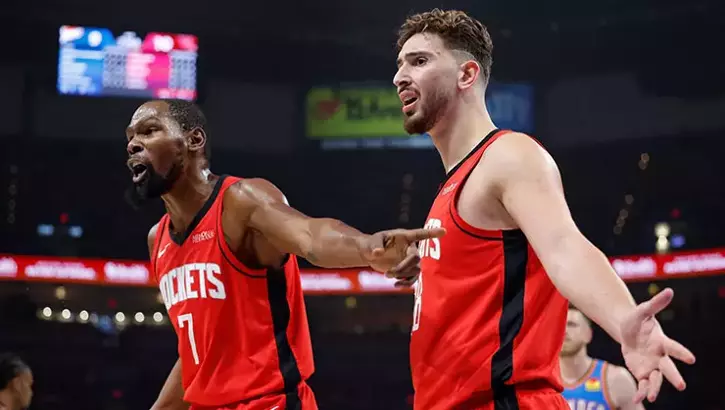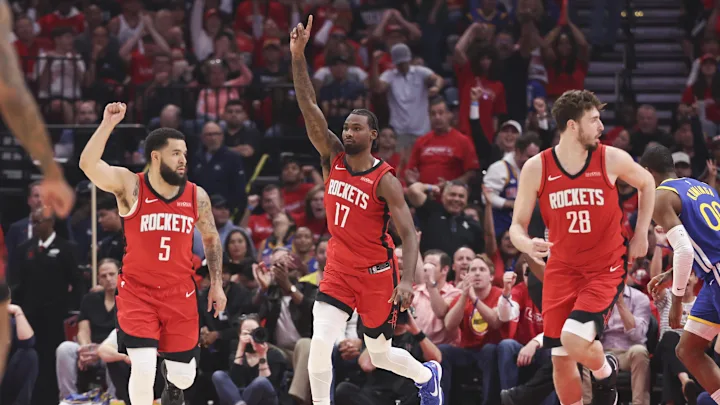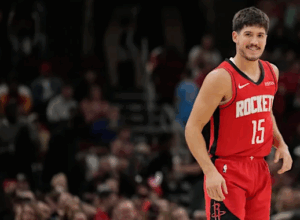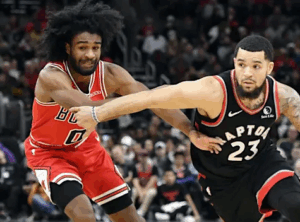

When the Houston Rockets unveiled their big-name offseason moves, including acquiring Kevin Durant, optimism rippled through their fans. Yet the early shock of a key injury has injected doubt into Houston’s high hopes. Point guard Fred VanVleet is now facing what may be a season-ending torn ACL, and his absence reverberates not just in Texas but across the NBA — including in Detroit, where fans and analysts will be watching Houston’s response closely.
In this article, we unpack what the VanVleet injury means for the Rockets’ season, how Houston might adjust its roster and strategy, and why Detroit basketball followers should care. You’ll get a detailed recovery timeline, competitive outlooks, and a localized lens on how this shifts the balance across the league.
VanVleet’s Injury: Scope, Prognosis & Media Day Twist
What Happened & Expected Timeline
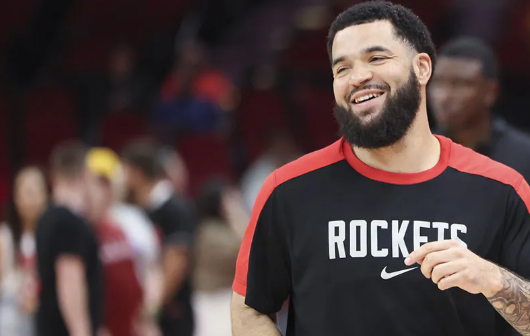
Fred VanVleet suffered a torn anterior cruciate ligament (ACL) in an offseason workout — a devastating blow for Houston’s roster plans. Recovery from a torn ACL typically spans 9 to 12 months (or more, depending on complications). In most cases, this suggests VanVleet will miss the entire 2025–26 season.
Because of this, he did not participate in Houston’s media day activities. But rather than hide from the spotlight, VanVleet leaned into self-deprecating humor to soften the sting. He posted on X (formerly Twitter) a short video of his rehab, captioned:
“Media day looked a lil different this year. Atleast I didn’t have to do interviews ready to see the guys compete.”
It was a clever way to flip the narrative — acknowledging the setback while showing he still has presence, even from the sidelines.
Why the Joke Resonates
It’s easy to dismiss a social post as a throwaway moment, but VanVleet’s quip lands for several reasons:
-
Relatability under adversity: Fans love players who can show toughness with lightness.
-
Deflection of pressure: By joking about “not doing interviews,” VanVleet sidestepped media scrutiny about his absence.
-
Maintaining identity: Even injured, he’s reminding everyone he’s still “in the room,” psychologically part of the team.
Humor doesn’t erase the seriousness of an ACL tear, but it reflects a mindset that can help during long rehab stretches.
Houston Rockets Without VanVleet: Strategy & Roster Moves
Losing VanVleet leaves a glaring hole at point guard — both in leadership and continuity. The Rockets must act smartly to reorient.
Internal Options & Youth Movement
Houston has a few internal routes:
-
Amen Thompson
Drafted as a point guard, Thompson has raw talent, athleticism, and upside. But using him as the floor general may expose his developmental gaps — particularly in decision-making under pressure. -
Reed Sheppard
The 2024 third overall pick, Sheppard is touted as one of the league’s pure shooters. His range can help stretch defenses. But can he reliably run offense, handle pressure, and lead a playoff push? That’s less certain. -
Rotation reshuffling
Houston might restructure minutes — using combo guards or small ball lineups — to reduce pressure on any single newcomer.
External Moves & Trade Window
If internal options don’t suffice, Houston could explore:
-
Midseason trades
A veteran point guard trade in exchange for non-core assets could shore up stability. -
Free agent pickups
Teams sometimes pick up midseason signings, especially for backup roles. But finding a floor general of VanVleet’s caliber is rare. -
Scheme tweaks
The coaching staff, led by Ime Udoka, may retool offensive sets to be less guard-centric and more wing or big oriented to offset the loss.
Potential Risks & Weaknesses
-
Defensive drop-off
VanVleet is more than a shooter — he’s a perimeter defender, disrupting passing lanes and resisting opposing guards. The replacement must pick up that slack or Houston could suffer in transition. -
Inconsistency in offense
Without a reliable playmaker, Houston’s pick-and-rolls, spacing, and rotations can become chaotic. -
Chemistry delays
New configurations take time. With expectations high, the Rockets cannot afford a slow start.
Wider Impact: NBA Landscape & Detroit Relevance
Western Conference Ramifications
The Southwest and Western Conference look different now. Houston invested heavily in Durant and surrounding pieces; their ceiling drops if they can’t stabilize the guard spot. Teams that might benefit:
-
Denver, Phoenix, Oklahoma City — less hurdle to pass
-
New Orleans, San Antonio — more competitive buffer zones
Why Detroit Fans Should Pay Attention
You might ask: What does this have to do with Michigan? Plenty:
-
Rivalry & trade chatter
Detroit’s front office and pundits keep tabs on all trade market moves. Houston’s desperation may fuel notable transactions that ripple across league rosters that Detroit could exploit. -
Pistons scouting lens
With Detroit rebuilding, watching how Houston tries to reorganize gives lessons in leveraging youth, vet contracts, and injury contingencies. -
Broadcast & fan interest
In national coverage, the Rockets are big storylines. Michigan’s NBA fans love “what ifs” — and analyzing Houston adds depth to their basketball knowledge. -
Player comparisons
Guard injuries, development curves, rehabilitation — these are universal. Michiganders watching Sparks, Pistons-affiliated talent, or draft prospects will glean insights from Houston’s case.
Recovery & Return: What’s VanVleet’s Roadmap?
Medical & Rehab Process
Rehab from ACL surgery is grueling. Key phases include:
| Phase | Time (approx.) | Focus |
|---|---|---|
| Post-surgery & healing | 0–2 months | Pain management, swelling control, basic mobility |
| Strength & range rebuilding | 3–6 months | Muscle re-strengthening, controlled motion |
| On-court reintroduction | 7–9+ months | Sport-specific drills, agility, shooting |
| Full return & monitoring | 9–12+ months | Practice rep increase, contact, load management |
Each stage brings challenges: setbacks, mental fatigue, reinjury risks. For VanVleet, who relies on quickness, lateral movement, and reaction speed, regaining top form will require patience and precision.
What Recent Cases Teach Us
Looking around the league:
-
Kawhi Leonard returned from ACL but had to re-adapt.
-
Klay Thompson’s comeback took incremental steps, especially reestablishing shooting rhythm.
-
Stephen Curry (while not ACL) shows that vet guards often take longer to trust cuts, changes in pace.
VanVleet, at age ~31, will need to balance urgency with smart calibration.
Projecting Houston’s Season: Best, Base & Worst Scenarios
Best-Case Scenario
-
One of the young guards (likely Sheppard or Thompson) adapts quickly.
-
The supporting cast — bigs and wings — step up to carry heavy scoring & playmaking load.
-
Houston remains a 45–50 win team, sneaks into the playoffs, and hopes VanVleet returns late to boost depth.
Base (Moderate) Outcome
-
The in-house guards struggle for consistency.
-
Houston hovers around 40–45 wins. Possibly a play-in berth.
-
VanVleet gets 4th quarter minutes late season if rehab stays on schedule.
Worst Case
-
Guard rotation collapses under pressure.
-
Houston fails to reach the postseason or crashes early.
-
VanVleet’s rehab setbacks delay return to next season.
Detroit & Michigan Angle: What Local Fans Should Watch
-
Pistons vs. Rockets
Detroit’s matchups against Houston will look different — possibly easier without VanVleet in crunch lineups. But they can’t neglect the potential of Durant, Sengun, and others dominating. -
Talent evaluation parallels
Watching Reed Sheppard or Amen Thompson adjust can help Michigan watchers compare to local or regional prospects, including in the Big Ten or high school circuits. -
Narrative control
Michigan media can lean stories: “If VanVleet can rehab, what’s stopping Pistons’ guard talents from doing likewise?” -
Media day behavior
The way Houston handles media and morale during ad hoc seasons offers lessons for how Detroit orchestrates public narratives in times of flux.
Call to Action & Outro
Fred VanVleet’s injury alters everything for Houston — not just in lineup charts, but in their identity going forward. Yet amid absence and uncertainty, his humor, resilience, and rehab will remain front of mind.
For Detroit fans, analysts, and those hungry for basketball stories — the VanVleet saga is one to monitor. It’s a live case study in roster pivoting, injury psychology, and the risks embedded in championship-building.
Stay tuned — and keep your eyes on Houston’s next moves, because in the high-stakes world of the NBA, every injury and every trade can shift power not just in Texas, but all the way to Michigan.
FAQ (Frequently Asked Questions)
Q: How long does it take to recover from a torn ACL?
A: The usual timetable is 9 to 12 months for athletes to return to full play, though it can vary based on rehab, surgical success, and setbacks.
Q: Could VanVleet return mid-season?
A: It’s unlikely. Given the severity, a mid-season return would be optimistic. A safer bet is targeting late-season or early next season availability.
Q: Will Houston trade for a replacement guard?
A: It’s possible — especially if the internal options don’t perform. The trade deadline often sees veteran guards exchanging hands.
Q: Who can realistically fill VanVleet’s shoes?
A: None perfectly. Someone who provides playmaking, defense, shot creation, and leadership — a rare combo. The best options may be projecting upside in younger players.
Q: How might this injury affect Houston’s title chances?
A: Without VanVleet’s steady presence, Houston’s ceiling drops. The defense and offensive flow may suffer — meaning they have to rely more heavily on stars like Durant.
Q: What should Detroit fans watch for?
A: How Houston adjusts, which trades or internal rotations emerge, and how Detroit’s own guard development stacks against what Houston experiments with.