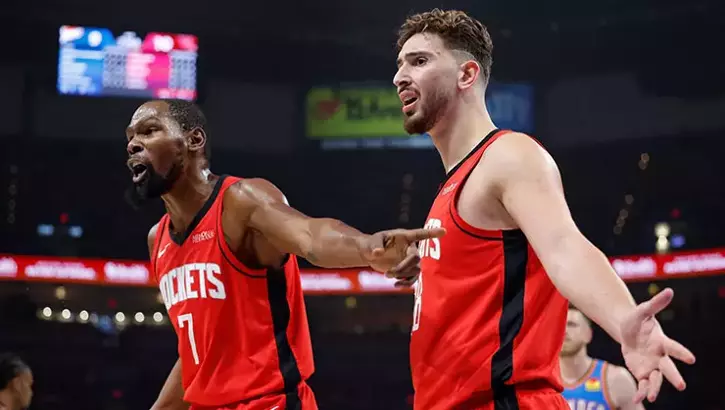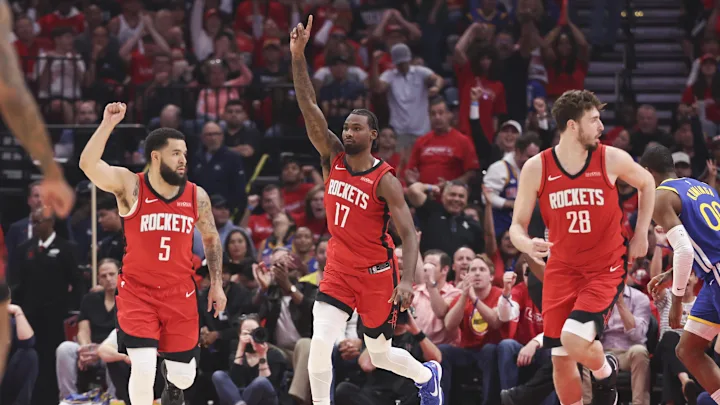



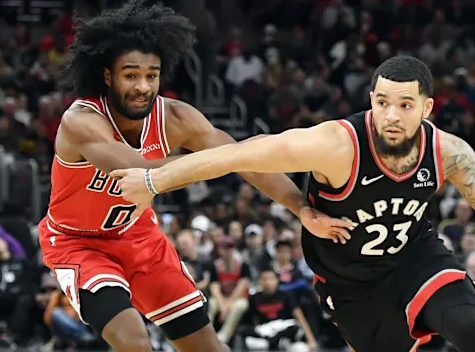
In the wake of Fred VanVleet’s ACL injury, the Houston Rockets find themselves scrambling for a floor general who can lead, defend, and create offense. Enter a speculative blockbuster: trading Coby White from the Chicago Bulls to Houston. On paper, it makes sense—at least partly. But does it truly reshape the title race? And what are the risks? Today, we dig deeper into that proposed deal, grade the components, and explore how this could ripple across the league — even in Detroit.
The Proposed Trade: What’s on the Table?
Under this hypothetical deal, Chicago would send Coby White to Houston in exchange for Reed Sheppard and Efton Reid (Eason in variant reports). The reasoning: Houston needs a ballhandler with NBA experience now, while Chicago might lean into youth, assets, or wait until White becomes an unrestricted free agent.
Let’s break down both sides:
Rockets’ Side: Why They’d Do It
-
Immediate point guard help
With VanVleet sidelined, Houston needs someone who can competently run the offense, reduce turnovers, and attack the rim when needed. White has those skills—he’s not perfect, but he’s playable. -
Contract alignment
White’s free agent status helps Houston frame this as a short-term bridge. They can lean on their big contracts (Durant, Sengun, etc.) while seeing what internal talent emerges. -
Supporting cast fit
White could pair with stars like Kevin Durant, Alperen Sengun, and rising younger pieces to form a complementary core.
Bulls’ Side: Why They Might Consider It
-
Avoid overpaying
White reportedly wants a big extension. If Chicago thinks that valuation is too steep or risky, trading now allows them to extract value. -
Youth infusion
Reed Sheppard is a high draft pick with deep shooting upside. Efton Reid (or Eason) offers defensive length and upside as a forward/center. -
Cap flexibility and reshuffle
By moving White, Chicago can pivot flexibility into future trades, free agency, or retooling their guard rotation.
Grading the Trade: Strengths & Weaknesses
Grade (for the Bulls): B+
This is essentially the view taken by the original article. Let’s flesh out why:
Pros for Bulls:
-
They get a young sharpshooter in Sheppard whose ceiling is tantalizing.
-
They receive a defensive interior piece in Reid/Eason, which addresses a frontcourt need.
-
They maintain flexibility—they aren’t locked into an overpay for White or a long-term extension.
Cons for Bulls:
-
They lose their top scorer from last season, which could weaken their offensive coherence.
-
There’s risk in betting on unproven players (Sheppard hasn’t yet shown he can lead a playoff team).
-
If White signs elsewhere in the offseason, Chicago may lose talent and not get long-term returns from those they receive.
Rockets’ Risk / Reward
Upside:
-
They address a glaring need at point guard in the short term.
-
They maintain postseason hopes instead of starting from scratch.
-
White complements Houston’s star pieces.
Downside:
-
White might not fully compensate for VanVleet’s defensive presence, IQ, or leadership.
-
If the rest of the roster doesn’t gel, Houston’s title window may close early.
-
There’s little room for failure—this move would carry heavy expectations right away.
Deeper Implications for Houston’s Title Chances
Offensive Flow & Spacing
Let’s assume White lands in Houston. He’s not the ideal stabilizer VanVleet is, but he adds driving/shooting versatility. The Rockets’ offensive sets may shift:
-
More pick-and-rolls with Durant or Sengun initiating.
-
Spot-up shooting becomes critical — wings must be reliable off the catch.
-
Ball distribution may become more team-centric (less dependence on a single point guard).
If the cast around White steps up (shooters, cutters, defenders), Houston can survive this bump.
Defense & Transition
VanVleet’s perimeter defense was a key glue. White is not as disruptive or tenacious on that end. Houston may need to lean more heavily on help defense, switching schemes, or sacrificing in certain matchups.
Chemistry & Timing
New lineups take time. Houston cannot afford a sluggish start. White (if acquired) must integrate quickly, especially with high expectations after the Durant acquisition.
A Detroit Lens: Why Michigan Fans Should Be Watching
You might wonder: why should Detroit’s NBA audience care about this speculative Bulls–Rockets trade? Here’s why:
Pistons Perspective & Comparisons
-
Detroit is in a rebuild. Watching how Houston handles sudden roster disruption offers lessons.
-
Young Pistons guards and wings can be benchmarked against what Houston tries with White or Sheppard.
-
Trade tactics—when to move veterans vs. hold and build—are relevant to Detroit’s front office conversations.
Regional Relevance & Storylines
-
Bulls and Pistons have intertwined histories; Detroit media often tracks Chicago’s roster moves.
-
In broadcast or national discussion, a Houston trade involving White will ripple into coverage of the Central Division and Midwest dynamics.
-
Michigan basketball fans may see echoes of this approach in Big Ten and local pro team conversations.
Fan Engagement & Narrative
-
Local fans love scenario debates. Will Houston gamble for win-now? Will Chicago retool smartly?
-
Detroit blogs, podcasts, and coverage can lean on this trade chatter to draw parallels, engage readers, and stay connected to league-wide movement.
What Could Happen Next: Scenarios & Outlooks
Let’s walk through possible outcomes if such a trade were to occur (or not):
Scenario 1: Trade Happens, Rockets Make Push
-
Houston enters the season confident with White at the helm.
-
If supporting cast outperforms expectations, they make a deep run.
-
White signs a short-term deal to stay in Houston during VanVleet’s absence.
Scenario 2: Trade Fails, Houston Stumbles
-
Houston leans on internal guards (Sheppard, Amen Thompson) with inconsistent results.
-
Without reliable guard play, they underachieve, and title expectations get eroded.
-
Front office must scramble midseason for reinforcements.
Scenario 3: Chicago Rejects, Retains White
-
The Bulls double down, extend White and build around him.
-
Houston pursues other guard alternatives or trades elsewhere.
-
White becomes a centerpiece for Chicago’s next era.
Extended Analysis & Considerations
Valuation & Negotiation Risks
-
White’s free agency status gives him leverage—but also risk for Houston; they may overpay short-term.
-
Chicago must decide whether they trust Sheppard/Eason to contribute meaningfully or whether they take a safer route (e.g. veteran guards from elsewhere).
-
Negotiation will pivot around contract years, guarantees, and trade protections.
Fit & Role Clarity
-
White would likely need to adapt to being both a playmaker and a secondary scorer, not just a No. 1 option.
-
Sheppard must prove he can handle more usage and defensive responsibility.
-
Eason/Reid’s role must be clearly defined — rim protection, rebounding, or complementing offense.
Health, Continuity & Performance Risk
-
Injuries, chemistry, adaptation—any of these could derail the plan.
-
Houston needs consistent health from Durant, Sengun, and others to mask guard turbulence.
-
Chicago risks losing offensive stability if White leaves and the replacements don’t deliver.
Call to Action & Outro
A proposed Bulls–Rockets swap involving Coby White is far from guaranteed—but it is intriguing. It strains logic in many ways, but under the right circumstances, it could shift title dynamics in the Western Conference. Yet the risks loom large. For the Bulls, it’s a gamble between retaining a known scorer or pushing youth forward. For Houston, it’s a bet between reloading quickly or watching momentum slip.
Detroit and Michigan’s basketball community should lean into scenarios like this. They’re the lifeblood of fan debate, coverage, and insight into how franchises manage unpredictability.