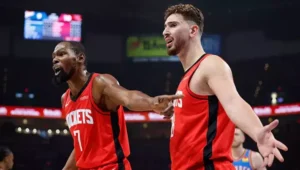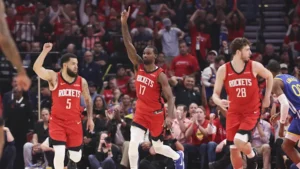
In Houston’s new basketball era, the biggest question isn’t “Who leads on offense?” but rather: How big can we get and stay dangerous? That’s the thesis behind a bold roster strategy emerging this season — lean into size early, make your opponents uncomfortable, and flip conventional matchups on their head.
A recent analysis argues the Rockets might need to lean on a single “monster lineup” — one that emphasizes length, versatility, and mismatch chaos — to salvage not just stretches of their season, but its trajectory.
Why this matters now: changing context, high expectations
Houston is no longer a rebuilding franchise. With stars, ambition, and scrutiny come expectations. The margin for error is slender. In this climate, small advantages matter. A lineup that defies convention — one that forces opposing coaches to rejigger rotations — can become a strategic lever rather than a gimmick.
Over the past seasons, some of the league’s most persistent disruptors have been teams that set the size tone early (think the Bucks, Nuggets, or even the modern Warriors with Draymond-type wings). Houston is courting that blueprint — but its success will depend less on raw talent and more on how wisely it uses its mismatches.
Anatomy of the “monster” starting five
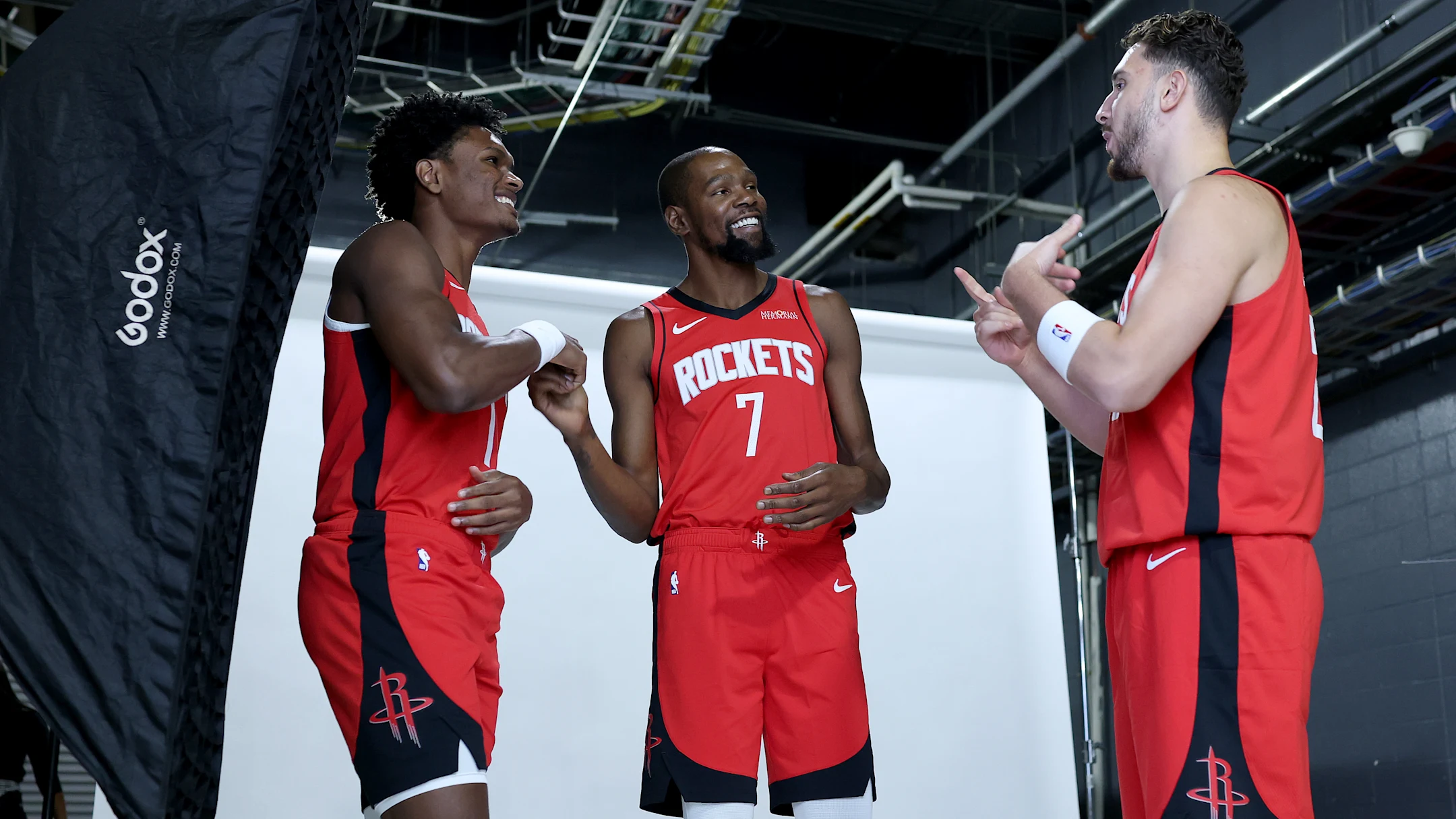
The proposed five is provocative. The idea: push as much length as possible across the floor to pressure opponents in ways they aren’t built to counter. The ideal look:
-
Point Guard: Amen Thompson — not a traditional guard, but a tall playmaker who fits the room.
-
Shooting Guard: Dorian Finney-Smith — defensive size, veteran balance, and flexibility.
-
Small Forward: Kevin Durant — the gravity and scoring upside that demand all defenses adjust.
-
Power Forward: Jabari Smith Jr. — modern stretch presence, switchable, long.
-
Center: Alperen Şengün — a do-it-all big who can pass, rebound, and anchor the paint.
This lineup is essentially size from 1 to 4 — the only conventional “big” is Şengün, and even then he’s versatile enough to operate off the ball. In a league that prizes switchability and anti-speed, this kind of package puts the Rockets in the “undesirable matchup” category. It forces opponents to either play smaller and risk getting muscled or stay big and risk being slower.
There’s talk of mixing in Tari Eason in Finney-Smith’s role — another 6’8″ body — depending on matchup or spacing needs. That rotative flexibility magnifies the lineup’s adaptability.
Strengths, risks, and the balancing act
Strengths
-
Matchup stress: Opponents have to choose — stay big and risk being overpowered or shrink and lose in the paint.
-
Defensive ceiling: This lineup can pressure passing lanes, contest shots across angles, and hedge switch actions more aggressively.
-
Spacing supported by stars: With Durant and smart rotation, the floor won’t collapse completely — there’s balanced offense.
-
Lineup “must-combat”: Opponents have to prepare tactical counters. Houston can set the tone of the game.
Risks
-
Point guard limitations: Thompson is unconventional for the 1 spot. If the offense becomes stagnant or turnover prone, that decision will be scrutinized.
-
Spacing holes: Some lineups may lack enough shooters, especially if opponents flood the paint or overload wings.
-
Fatigue / mismatches: Against ultra-quick teams, length can be tested at speed. Overuse of this unit could invite exploitation.
-
Bench balance: If the “monster” five is dominant, the second unit must still be competent enough to maintain leads.
Houston is essentially doubling down on identity: size, mismatch, and positional fluidity. The biggest question: can this lineup be more than a novelty? Can it become the lineup?
Supporting cast & rotation chess
In this vision, Reed Sheppard emerges as a vital cavalry piece. He might operate as point guard when the starters rest, or help run offense when Houston goes small. If he can manage the second unit and maintain functional spacing, he becomes less of a role player and more of a conversion factor in a long game.
Meanwhile, Eason, rotation wings, shooters, and defenders plug in around that core five. Their role is to shore up spacing, off-ball movement, and defensive relief. The monster five sets the tone, then the supporting cast sustains or pivots.
The real test will come when Houston leans into this shape for stretches — not just 6–8 minute bursts, but full quarters, back-to-back nights, and playoff intensity.
What to watch as the season unfolds
-
Early assaults: How often and how long will the monster five actually take the floor in crunch minutes?
-
Efficacy in playoffs: If Houston reaches the postseason, can this lineup adapt to big, disciplined teams?
-
Tactical counters: Will teams exploit spacing gaps with zone shifts, plunging guards, or pick-and-pop overloads?
-
Durant’s load management: With a star in the mix, durability and usage must be carefully managed.
-
Bench continuity: Will the second unit maintain leads or collapse under pressure?
If Houston makes this the architectural core — not just a press piece — then it will define both the season and how opponents guard them.
The idea of a “monster lineup” is electric — it promises reinterpretation of what a competitive small-market team can do. But its success isn’t assured. For Houston, it’s a hypothesis: play big, win mismatches, ignore convention.
If that experiment pays off — if the ceiling is high and the floor decent — Houston won’t just have a starting five. They’ll have a statement. And that statement could save their season.