
HOUSTON — November 14, 2025:
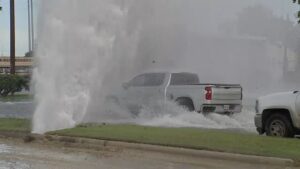
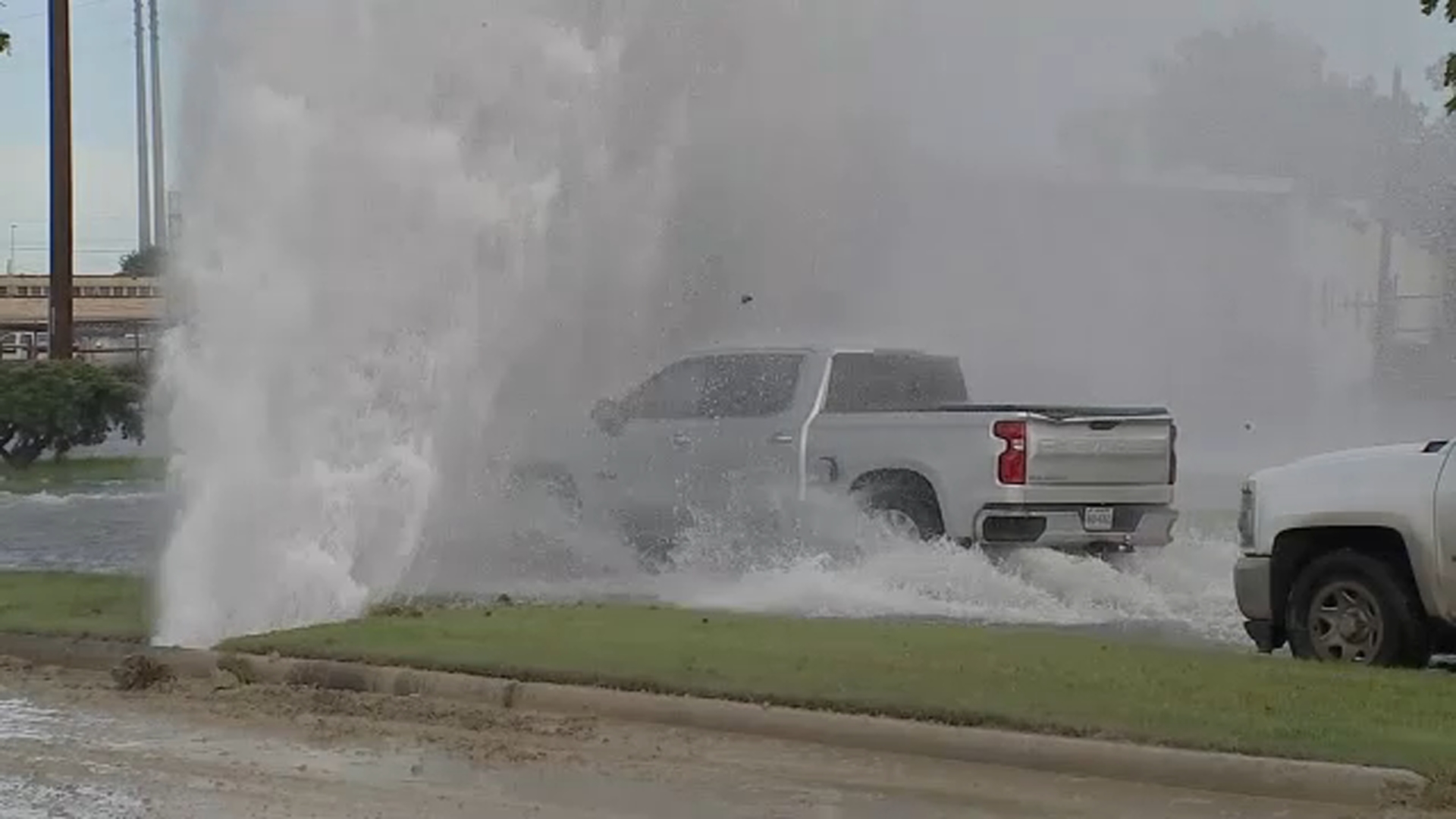
A massive water main burst early Thursday morning in Midtown sent thousands of gallons rushing across several blocks, flooding intersections, disrupting transit lines, and snarling traffic during one of the busiest commuting windows of the week. The break, located near the intersection of McGowen and Fannin, forced emergency crews to shut down multiple lanes and redirect METRORail service, leaving commuters scrambling to find alternate routes.
The rupture occurred just after 5 a.m., quickly turning parts of Midtown into a shallow, fast-flowing stream as water surged from an aging underground pipeline. By sunrise, city workers, emergency responders, and transit personnel were spread across the area attempting to contain the flooding and restore mobility.
‘Like a River Down the Street’
Residents waking up in nearby apartments described the sight of water pouring across the pavement long before city crews arrived. Some likened the flow to a “river running through Midtown,” with vehicles cautiously navigating around pools of water that grew deeper by the minute.
Within an hour, several blocks were closed to traffic as public works officials assessed the damage. Cars attempting to drive through flooded areas stalled or were pulled aside by police. Ride-share drivers were forced to bypass pickup zones, and several bus routes shifted temporarily to avoid the waterlogged streets.
METRORail Delays Ripple Across Downtown
The break struck a critical section of Midtown served by the METRORail’s Red Line, leading to significant delays and partial service interruptions. Transit officials initiated a bus bridge — a temporary system of shuttles designed to move passengers between active stations — but commuters still faced long waits as morning crowds built around platforms.
One commuter said it took nearly double the usual time to reach work, noting that train arrivals were unpredictable and shuttle buses struggled with detours around the flooded blocks.
Transit officials warned that repairs to signaling equipment affected by the flood could extend delays through the afternoon, depending on how quickly water can be cleared and power systems inspected.
Aging Infrastructure Under Scrutiny
The incident renewed long-standing concerns about Houston’s aging water infrastructure. Midtown, one of the city’s fastest-growing neighborhoods, still relies on decades-old underground systems originally built for a much smaller population.
Engineers on the scene said the rupture likely stemmed from pressure fluctuations or pipe fatigue, though a full investigation will follow.
City officials acknowledged the break is part of a broader pattern of infrastructure strain. Houston has experienced several major water main failures in the past two years, each causing widespread disruption. Many of the city’s pipelines — some more than 50 years old — are overdue for replacement.
A public works spokesperson said crews have been working through a prioritized upgrade plan, but rapid population growth and rising demand continue to push the system to its limits.
Businesses Hit Hard by Morning Disruptions
Morning cafés, clinics, and coworking spaces throughout Midtown saw sparse foot traffic as commuters struggled to reach the district. Some buildings temporarily lost water pressure, affecting restrooms, kitchen operations, and office occupancy.
A café owner along Fannin Street said the sudden drop in morning customers was the worst he had seen since a storm-related outage last year. He expressed frustration that businesses are often left to absorb the economic impact of infrastructure failures. “When the pipes go, we shut down. And nobody reimburses lost revenue,” he said.
Delivery services and couriers also faced delays, particularly those operating on tight schedules for medical centers and Downtown offices.
Flooding Contained, But Repairs Will Take Hours
By mid-morning, city crews successfully isolated the break and slowed the flow of water, allowing pumps and cleanup teams to begin clearing roadways. However, the repair process is expected to stretch into the evening.
Once the ground is excavated and the damaged section of pipe fully exposed, workers will assess whether a full replacement or a reinforced patch is required. Water service to surrounding residences remained stable, though officials warned of potential short-term pressure fluctuations.
Drivers were advised to avoid the affected area for the remainder of the day and use alternate routes such as San Jacinto, Main Street, and Alabama.
Public Works Urges Patience — and Awareness
City leaders stressed that while water main breaks are not uncommon in major urban centers, the timing and location of Thursday’s event amplified its impact. The intersection sits at a critical mid-point between Downtown and the Texas Medical Center, affecting thousands of morning commuters.
Officials urged residents to sign up for emergency alerts and stay tuned to transportation updates, adding that this morning’s disruption is a reminder of the importance of long-term investment in Houston’s water infrastructure.
One city official noted, “This is a wake-up call. These systems need oversight, updating, and funding — because each failure ripples across every part of Houston.”