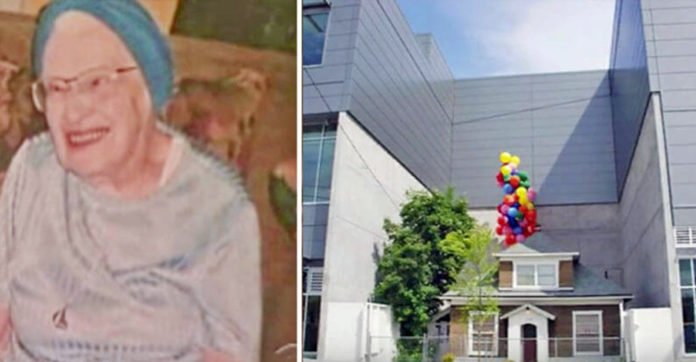
In the heart of Houston’s East End, tucked between luxury townhomes and glossy high-rises, sits a modest one-story house that has become a quiet symbol of defiance. It isn’t remarkable in size or appearance — a faded pale-blue bungalow with a small porch, flower pots, and creaky steps that have seen generations come and go. But what makes it extraordinary is the woman who owns it and the decision she made that reverberated through her community.
When a real estate developer offered her a staggering one million dollars for the property, Evelyn “Miss Evie” Johnson, an 82-year-old grandmother, didn’t hesitate.
She said no.
Her refusal wasn’t driven by greed or stubbornness, but by something far more powerful — memory, belonging, and the conviction that some things simply aren’t for sale. In a city constantly reshaping itself, Miss Evie’s story has come to represent a growing resistance against unchecked gentrification and the quiet erasure of history in Houston’s oldest neighborhoods.
The House That Love Built
Evelyn Johnson’s tiny home was built by her late husband, Raymond, in 1964 — back when the street was lined with modest single-family houses, small churches, and corner stores where everyone knew your name. The couple raised three children here, celebrated birthdays on the porch, and sheltered family through hurricanes and hard times.
The walls, she says, still hold laughter and music from Sunday dinners and block parties that used to spill into the street.
“This isn’t just wood and nails,” she explains, sitting in her porch rocker. “It’s the story of my life, and the lives of everyone who passed through those doors.”
Raymond worked as a mechanic at a nearby shop, and Evelyn took in laundry for neighbors. Together, they paid off the mortgage in 1987. The house isn’t large — barely 900 square feet — but to her, it’s grander than any high-rise condo.
The Offer
The neighborhood began to change about a decade ago. New restaurants appeared, small art studios replaced auto shops, and soon sleek multi-unit townhomes started sprouting where old cottages once stood.
Developers took notice of Evelyn’s block, which sits conveniently near a new transit line and downtown amenities. Property values soared. Most of her neighbors, some elderly and others younger but overwhelmed by property taxes, began selling.
Then came the letter — a formal purchase offer for $1,000,000. The developer, a Houston-based firm that had already acquired six adjacent lots, wanted Evelyn’s land to complete a multi-building residential project.
A representative came by personally, promising to “take care of her” and assuring her that she could “move anywhere she wanted.”
Evelyn listened quietly, then smiled politely.
Her response was simple:
“I appreciate your offer, baby. But this house isn’t on the market.”
A Neighborhood Under Siege
To outsiders, refusing a million dollars might seem irrational. But to residents of Houston’s historically Black and Latino neighborhoods — from Fifth Ward to the East End to Independence Heights — Evelyn’s stand makes perfect sense.
Over the last 15 years, rising land values and redevelopment have displaced thousands of longtime residents. Properties that once sold for $40,000 now fetch hundreds of thousands, often resold within months.
For elderly homeowners on fixed incomes, gentrification can feel like a slow tightening vise. Tax assessments skyrocket, services shift toward new demographics, and neighbors who once watched each other’s kids are suddenly gone.
“Developers come in with big smiles and bigger checks,” says community organizer and pastor Jerome Wilkins, who has helped residents appeal property taxes and navigate legal notices. “But what they’re really buying is history — and erasing it at the same time.”
Evelyn’s refusal resonated deeply because it represented more than personal defiance. It became a moral stand — a declaration that home and heritage outweigh market logic.
The Pressure Builds
The developer didn’t give up easily. Over the next six months, Evelyn received multiple letters, phone calls, and even a visit from a legal representative suggesting eminent domain might be invoked for “urban renewal.”
Neighbors reported that construction crews working nearby began parking equipment on her curb, and surveyors occasionally appeared at the edge of her yard without notice.
“I used to sit on my porch and wave to everyone,” Evelyn says. “Now I feel like I’m guarding something — like they’re waiting for me to die so they can move in.”
Community members rallied around her, forming a local advocacy group called Homes Before High-Rises. They hosted cookouts and fundraisers, raising awareness about the mounting pressures facing older residents.
A Growing Movement
Evelyn’s story spread quickly. Local students interviewed her for a school project. A small mural of her likeness appeared on a brick wall nearby, beneath the words: “This home is history.”
Soon, her house became a symbol for preserving Houston’s cultural fabric — not through museums or preservation districts, but through the everyday people who hold on.
Advocacy groups across the city began using her story to draw attention to displacement trends. The irony, they noted, was that her home’s modest footprint contrasted sharply with the inflated price tag it carried simply because of its location.
“She’s sitting on what the city now calls prime real estate,” says urban planner Denise Grant. “But to her, it’s sacred ground. That’s a form of wealth that can’t be priced.”
The Hidden Costs of “Progress”
Houston’s rapid growth is often celebrated — new investment, new construction, rising property values. But beneath the surface, that progress often comes with invisible costs.
When developers replace affordable single-family homes with luxury units, the social ecosystem changes:
-
Displacement: Longtime residents move away from schools, churches, and family networks.
-
Cultural erasure: Historic architecture and neighborhood identity vanish.
-
Economic exclusion: Small local businesses struggle to afford higher rents and property taxes.
Evelyn’s block used to have three family-owned stores. All are gone.
Now, the nearest grocery store is a boutique organic market selling kombucha and imported cheeses — luxuries far beyond the budget of most original residents.
“I don’t even know what half those things are,” Evelyn laughs. “I just want my cornbread mix and greens.”
Her humor softens the ache, but her eyes betray the loss. “They build these places for other people, not for us,” she says quietly.
Community Support and Resistance
Support for Evelyn grew beyond her block. Local churches offered to help with legal advice should pressure intensify. Residents signed a petition demanding the city strengthen protections against displacement for seniors and legacy homeowners.
An architecture student at the University of Houston created a 3-D model of her house, highlighting its cultural value in presentations about “resilience architecture.”
Meanwhile, Evelyn kept her life simple: tending to her garden, sitting on the porch, greeting children walking home from school.
Her porch became an informal gathering space again, just like decades ago — only this time, the conversations weren’t about block parties but about survival and belonging.
The Human Side of Refusal
Turning down a million dollars meant saying no to comfort, too. Evelyn could have bought a new house in the suburbs, traveled, or funded her grandchildren’s college education.
But she insists it was never about money. “If I took that money, what would I be buying? A new place where I don’t know anyone? A life that doesn’t fit me?”
She pauses. “I’d rather stay right here and fight for what’s mine.”
Her decision cost her some peace of mind — she admits to sleepless nights and anxiety when unmarked cars park nearby. Yet she says she’s never once regretted her choice.
“You can’t buy roots,” she says. “You either have them or you don’t.”
City Hall Takes Notice
Eventually, city officials became aware of Evelyn’s situation. While they could not intervene directly in a private property negotiation, council members began discussing broader zoning and tax incentives that might protect long-time homeowners.
One proposal under review would cap property tax increases for senior citizens in designated “heritage zones,” allowing them to remain in place even as market values rise.
Another idea under consideration would give nonprofit housing trusts first rights to purchase land in rapidly gentrifying areas, preserving affordability.
Evelyn’s case, in effect, reignited a citywide conversation about balance — how Houston could grow without losing its soul.
The Developer’s Response
Representatives from the development company eventually issued a brief statement saying they “respect property owners’ rights” but expressed “disappointment” that the sale did not proceed. They cited the project’s potential for job creation and tax revenue.
Privately, several residents believe the firm underestimated public reaction. Their aggressive pursuit of Evelyn’s property backfired, galvanizing public opinion and slowing progress on adjacent developments.
As of now, the lot next door remains fenced off, its construction equipment silent.
A Symbol Larger Than a Home
Evelyn never set out to be an activist. Yet her decision has come to embody something larger — a quiet rebellion against dispossession, an affirmation that belonging matters more than valuation.
Her stand resonates especially in a city like Houston, where unregulated development often dictates neighborhood destiny.
“She didn’t just refuse a sale,” says Pastor Wilkins. “She drew a line in the sand — a moral line that says our history isn’t for auction.”
Now, schoolchildren visit her home on community tours. Artists have painted her image on murals, and civic groups have nominated her for local heritage recognition.
To her, it’s all surreal. “I’m just trying to live my life,” she says. “I didn’t plan to be nobody’s headline.”
Lessons from Miss Evie’s Story
Her experience offers lessons for homeowners, policymakers, and city planners alike.
1. Value Beyond Market Price
Communities are made of people, not appraisals. Economic development should enhance, not erase, the lives of those who built these neighborhoods.
2. Protect Legacy Homeowners
Cities can implement policies that help long-time residents remain in their homes — from tax freezes to legal assistance programs.
3. Encourage Ethical Development
Developers should adopt community benefit agreements, ensuring that new projects contribute to neighborhood stability and affordability.
4. Preserve Local Identity
Architecture, murals, and cultural landmarks help neighborhoods retain character. Investing in them sustains a sense of continuity amid change.
5. Empower Seniors
Older residents often serve as cultural anchors. Providing resources and respect for their agency is essential for social cohesion.
The Legacy
Today, Evelyn Johnson still lives in her little blue house. The roses she planted decades ago bloom by the fence each spring. Children still wave as they walk past, and the hum of construction on nearby lots continues — but her porch remains untouched.
To some, she is just an elderly woman living out her days. To others, she’s living proof that courage doesn’t always come with noise or headlines.
Her quiet stand has already reshaped the narrative: not just about one house, but about what it means to belong in a city that often forgets its elders in pursuit of progress.
“People say I could’ve been a millionaire,” she laughs softly. “But baby, I already am. Just not in the way they think.”
FAQ
Q: Who is Evelyn “Miss Evie” Johnson?
An 82-year-old Houston resident who refused a $1 million offer from developers for her small family home in the East End.
Q: Why did she reject the offer?
She values heritage, memory, and community over money. The home was built by her late husband and holds deep personal significance.
Q: What does her story symbolize?
Resistance against gentrification, preservation of local culture, and empowerment of legacy homeowners.
Q: Has the city taken action?
Her story spurred discussions about tax relief and preservation policies for seniors in historically significant neighborhoods.
Q: What happened to the developer’s project?
It stalled after public pushback and logistical setbacks, though nearby redevelopment continues.
Q: How is the community involved now?
Neighbors and local organizations formed advocacy groups promoting fair housing, heritage zones, and awareness about displacement.